enviado al mail
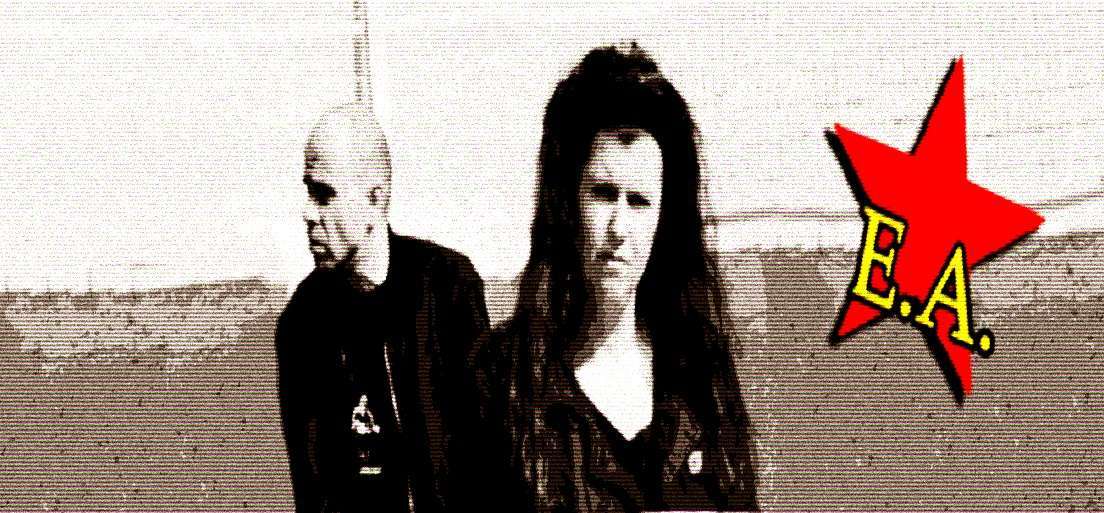
(Grecia) Entrevista a Pola Roupa y Nikos Maziotis, miembrxs de Lucha Revolucionaria
INTRODUCTION
In 2017 Red Help International sent some (30) questions to the imprisoned members of the anarchist armed group Revolutionary Struggle, Pola Roupa and Nikos Maziotis.
These questions are devided in 4 chapters: The 1st under the title “Context and Genesis”, the 2nd “Political and Strategic Project”, the 3rd “History strictly speaking” and the 4th, “Temporary assessment of Revolutionary Struggle and of the movement in Greece”.
Through the answers of the comrades, one can understand the historical conditions in which Revolutionary Struggle was created in 2003 and acted until 2017, the social, political and economical conditions of the entire era.
Revolutionary Struggle since September of 2003 until January of 2017 carried out 18 attacks-acts against targets of the regime, state and capital. Bombing attacks against courts, police stations, ministries, banks, against the Stock Exchange of Athens, the Bank of Greece-IMF, armed attacks against officers of riot police, attack against the USA embassy in Athens with antitank rocket, attempt against the former minister of Public Order, and an escape attempt (hijacking a helicopter).
The first arrests of the comrades happened in 10 April of 2010, exactly a month after Lambros Foundas –a member of Revolutionary Struggle– was killed by gunfiring with the police in a preparatory action of the group.
Pola Roupa and Nikos Maziotis who from the first moment took the political responsibility of their participation in Revolutionary Struggle, were temporary imprisoned until 11 October of 2011 because according to the greek law, nobody can remain in prison over 18 months without sentence and in October of 2011 the first trial against the group had just started and they had not been condemned yet.
After 9 months while the first trial was in progress, Pola Roupa and Nikos Maziotis with their almost 2 years old son, who was born in prison as in April of 2010 Pola Roupa was 6 months pregnant, went underground to continue the armed struggle.
So, in April of 2014, Revolutionary Struggle carried out the attack with a car-bomb with 75 kilos of explosives, against the building of Bank of Greece close to Syntagma square in Athens, where was also located the office of the permanent representative of IMF (International Monetary Foundation) in Athens.
The attack was dedicated to comrade Lambros Foundas, who had been killed 4 years ago. Nikos Maziotis was arrested in 16 July 2014 injured after gunfiring with policemen and pursuit.
Pola Roupa attempted alone to hijack a helicopter in 21 February of 2016 for the liberation of Nikos Maziotis and other prisoners from Koridallos prison, but she didn’t complete the operation because the pilot was α former police officer and he was armed. So, after a fight inside the cockpit, the pilot landed the helicopter and comrade Roupa succeeded to escape. Finally the “antiterrorist” service with the help of special units arrested Pola in 5 January of 2017.
As a newspaper wrote, the capture of Pola Roupa was carried out after provided information.
Pola Roupa and Nikos Maziotis were wanted for 1 million euro each since January of 2014. It was the second time that members of Revolutionary Struggle were wanted with a price on their heads. In 2007, the State Department of USA offered 1 million dollars and the greek state 800.000 euro for the capture of the members of the group after the attack with an antitank rocket against the U.S. embassy in Athens.
The interview is included in the book-edition of 2019, “Proclamations – Texts of Revolutionary Struggle 2003-2018”.
Pola Roupa and Nikos Maziotis have been convicted to life sentence (for the attack against the Bank of Greece and the office of the IMF) and a hundred years for the rest of the attacks of Revolutionary Struggle. After the completion of all courts of appeal, their sentence has been reduced to 20 years in prison. Roupa was released on parole in November 2023 when she completed the 3/5 of her sentence 8 years and 4 months in prison and 4 years work and Maziotis will be released in September 2026 when he will have completed the total of his sentence 14 years in prison and 6 years work.
Interview of the prisoners members of Revolutionary Struggle
Pola Roupa and Nikos Maziotis to the International Red Help
1) Context and genesis.
From which militant encounters and which political scene was the Revolutionary Struggle project born?
Revolutionary Struggle originates from the Greek anarchist/anti-authoritarian political space and more specifically from the more “classical” anarchist tendency, which has references to class and social struggle and social Revolution aimed at the dissolution of capitalism and the state and the creation of a stateless-classless society. Because of our political backgrounds and political education, we believed and still believe that the formation of social and political consciousnesses arises from the alienating relationship between organized authority and society. A relationship imposed as a necessary condition of social existence itself through violence. State power is imposed through violence, coercion, oppression, fear.
The hierarchical social structure that imposes power, coercion and the violence of capital and the state as law, is responsible for the alienation and the subjugation. According to our political tradition, the political tendency from which we originate, the formation of free political consciences occurs through the struggle to overthrow organized power.
It is impossible to develop “islands of freedom” within the existing system. Their coexistence is impossible. Every attempt at freedom will either clash with the status quo, or it will be assimilated by it and will be annihilated. Therefore, any project of anti-establishment action must be linked to a broader movement of subversion, aimed at promoting and strengthening the revolutionary project in society.
The political tendency from which we come, believed that the most important and inseparable condition for the overthrow of the correlations of power, in the social and class war in favour of the poor and the weak of society, is the greatest possible connection of discourse and action with the burning issues of paramount importance for large sections of society in the historical period in question. Revolutionary Struggle, because of this political tradition we had, was identified both theoretically and in its action with the above position and principle.
The greatest possible contact with as many oppressed people as possible has always been the overriding aim for us, and armed action with its ability to spread the revolutionary discourse over a wide radius, more than any other form of action, served this aim. The political tendency of the anarchists from which we come, had no regard for any elitist attitude towards society. That is why in many social struggles we looked for points of connection with the anarchist-revolutionary program.
Revolutionary Struggle has always chosen political actions aimed at centralized political and economic strategies of the modern ruling regime, which de facto exercised the greatest influence on society and had primary responsibility for the changes in the social and class sphere, while in its theory it sought the maximum possible connection with the weakest social groups.
As anarchists we believed and still believe in the power of voluntarism in the struggle, but by revolutionary subjects who can play the role of a catalyst in political developments. Given the history of struggle that we continue as anarchists, armed struggle can, through concrete and carefully chosen political actions, give great impetus to the revolutionary project.
Also, based on our political background we believe that after the dissolution of the capitalism and the state, whose destruction should be immediate without transitional stages, a confederal social organization should be created, of whose the nucleus will be the Community, the Commune, the Collective –a confederal decentralized association of Communities, Communes at the national and international level– where the main role will be played by the assembly of the members of these associations, either in work places or in villages, towns, cities, neighborhoods and so on.
There can be no truly free society when you have the state as a centralized power mechanism. A society of economic equality and freedom, free of class divisions, presupposes decentralization and directly democratic decision-making processes.
When Revolutionary Struggle had carried out the attack on the Bank of Greece and the IMF in 2014, it had published a political platform with positions that in our opinion the revolutionary movement in Greece today should have, such as a unilateral payment stop and debt cancellation, Greece’ s exit from the Eurozone and the European Union, cancellation of the bank debts of the poor and the people in general, abolition of the banking system and socialization of the banks’ assets, expropriation and socialization of the property of capital and the state and its replacement by a confederal organization of popular assemblies and workers’ councils, whose coordination, communication and implementation of decisions would be carried out by elected and immediately revocable representatives, while at the national level we proposed a secondary body in place of the bourgeois parliament, a Confederal People’ s Assembly, whose members would be made up of authorized elected and immediately revocable representatives of the local popular assemblies of municipalities, communes, collectives and workers’ councils.
The historical context in which Revolutionary Struggle was formed, its analysis, its strategy and its project, is that of the rise of globalization at the beginning of the 2000s but also the time of the economic crisis that began in 2008 and is the greatest in the history of capitalism.
What was the situation in Greece at that time?
In 2003, when Revolutionary Struggle began its action, Greece was following the developments that took place at the international level, which were characterized by the rise of the phenomenon of globalization. Neoliberalism had been consolidated at that time by the socialist party, the country had been integrated into international markets, was a member of the Eurozone and had fully joined the war against ‘‘terrorism’’ that had been launched in 2001 after the attacks on the World Trade Center in New York and the Pentagon in Washington.
Despite the fact that the neoliberal reforms were a constant attack on the working class and the people in general, there was a sense of “prosperity” and “bliss” because of the adoption of the euro as currency and because the banks were lending lavishly. This was a way of covering the loss of workers’ incomes, that had been imposed because of the neoliberal reforms.
In fact, this period, 2002-2008, prepared the conditions for the crisis that Greece faced after 2008 when the US crisis broke out, which then affected the whole world.
This is because Greece, with a decayed productive and industrial structure, had already since the early 1990s become a country-importer of products from the industrially developed countries of the EU, a fact that was based on lending. The integration of Greece into the Eurozone from 2002 onwards aggravated these conditions, increasing lending and therefore the debt and the deficit, which went off the rails in 2009 when the international financial crisis had already erupted.
The Greek state went bankrupt in 2009 because, due to its large debt and deficit, it was excluded from the international markets that refused to lend it and Greek banks and foreign banks were exposed, since they could not collect the loans they had taken out in the previous period.
As Revolutionary Struggle, as early as 2005, in the years of false prosperity based on borrowing, when we had hit the Ministries of Employment and Economy, we had expressed the view that Greece has a very high debt, that the economy rests on shaky foundations, that if a crisis breaks out, the country will be in a very difficult position and that a collapse of the Greek economy is a possible development, if a major crisis with international dimensions were to occur, for which we have been confirmed.
We were basically foreseeing the future and we had realized already in 2007 the consequences that the collapse of the US mortgage market would have for Greece, which made us then adjust our strategy from 2008-’09 and onwards.
What was the situation of the revolutionary movement in Greece at that time? Especially what was the situation of guerilla organizations?
First of all, we cannot speak of a movement that has uniform goals, strategy or a single structure. Nor can we say that there was or is a revolutionary movement. The anarchist-anti-authoritarian political space from which we originate is a multifaceted “movement” with great variations in terms of goals or methods of struggle.
In the early 2000s, the most “radical” parts of the anarchist political space were characterized by an “insurrectionism”, i.e. they promoted insurgent methods of action without any analysis of the existing conditions, elevating the insurgent individual as the focus and main issue of the struggle, without having a long-term perspective that promotes action concerning the overthrow and dissolution of the capital and the state and their replacement by another type of social organization according to anarchist concepts. Beyond the insurrection no other prospect was put forward. In contrast to this, Revolutionary Struggle in the early 2000s, in very difficult conditions, through its action, raised the question of social Revolution again, put forward a perspective beyond the insurrection and spoke of the overthrow of the capital and the state.
The activity of Revolutionary Struggle could be defined as an impulse to overcome the insurrectionary perspective that dominated the Greek anarchist and anti-authoritarian political space.
In Greece, insurrectionism reached its peak with the December 2008 uprising after the murder of Alexandros Grigoropoulos, in which the anarchist/anti-authoritarian political space played a decisive role. But the deadlocks of insurrectionism became apparent in the immediate aftermath when recession struck the country and Greece was subjected to the programs of the IMF, ECB and the European Commission after 2010.
In the social unrest of that period (2010-2012), the a/a political space did not play a decisive role, precisely because it had no other prospect than to participate in the conflicts with the forces of repression when thousands of people besieged the parliament.
The lack of analysis of the crisis, the lack of political will, the lack of a revolutionary perspective were the reasons why the a/a political space were unable to intervene catalytically in this critical period, but they were also the cause of societal defeat in general.
Revolutionary Struggle from the beginning of its activity, through its analysis of the system during the period of apparent prosperity through borrowing that dominated Greece in the first half of the 2000s, understood the importance of the debt crisis, and saw the prospects and opportunities that would open up because of the crisis and its consequences.
So when it erupted, we expressed the view that there was an opportunity for a Revolution in Greece and that’s why we readjusted our action through the 2009 campaign of attacks. We said that a revolutionary movement that had armed struggle in its strategy needed to be established and that it should take advantage of the opportunity that was opening up because of the crisis.
As for the situation of the guerrilla organizations, when Revolutionary Struggle began its activity, it had been preceded by the dismantling of the leftist armed organization 17N in 2002, which had been operating since 1975, shortly after the end of the military dictatorship in Greece. At the time, the regime in Greece was triumphantly celebrating the end of the urban guerrilla warfare, signalling the impossibility of overthrowing the regime and guaranteeing security and social peace so that the country could continue to be incorporated into the neoliberal globalization chariot. But almost a year later in 2003, Revolutionary Struggle with the beginning of its activity belied the end of armed struggle and set new horizons in the circumstances of the war against “terrorism” and the dictatorship of the markets, the theory of perpetual growth and the end of economic crises.
What was at that time your analysis of the other experiences of armed struggle in Europe?
The conditions in the 1970s and ’80s when various armed struggle organizations were operating in Western Europe were very different from the present conditions in which Revolutionary Struggle was created.
Then there was bipolism, the competition between two rival systems that were represented on one side by the Soviet Union and on the other by the United States.
In the 1970s, because of the stagflation crisis, the model of Keynesianism and state intervention in the economy, that had dominated until then, began to be discredited. The neoliberal model rose and the states began to attack the gains of the old labour movement, while the dictatorship of the markets began to take shape steadily and gradually. In contrast, the conditions in which Revolutionary Struggle emerged in the early 2000s were defined by the US domination, globalization, neoliberalism and the war against “terrorism”.
The social and political conditions in the decades 1970 and 1980 when the armed struggle arized in Western Europe, had specific political and economic characteristics.
All over Western Europe there were strong labour struggles and uprisings and anti-war movements against the US intervention in Vietnam.
The model of Keynesianism and central state control of the economy was associated with post-war growth and high rates of profit for capital, but also with strong labour and trade union control over the redistribution of profits for the benefit of workers. Wage increases and inflation as factors feeding off each other gnawed away at profit rates and capitalists organized their counter attack.
According to the ruling doctrine, wage increases and gains in labour conditions were the reason for the emergence of stagflation, which culminated with the oil crisis in the 1970s.
Stagflation, i. e. the coexistence of high inflation and low to zero growth rates, put the “tombstone” on the Keynesian model of economic organization.
The first concern for capital was the attack on workers’ gains. The class conflict initially manifested itself with great vehemence both on the part of the working class and trade union struggles as well as from the political and economic system.
Fierce strikes and workers’ uprisings marked many countries in Western Europe in a class battle, where workers on the one hand and capital on the other claimed both a greater share of the wealth produced, but also control over production.
By the time these struggles were manipulated by the trade union leaderships negotiating on the basis of “workers conformity for the common cause of development” and the left parties flirting with power, strong radical political tendencies had emerged and the armed organizations of the time were formed proposing the overthrow of capitalist power.
Eventually, the Keynesian model failed, neoliberalism dominated as a global economic trend and the fierce attack on the workers’ gains could not be stopped, as there was no alternative for the system and no “middle way” that would combine workers’ social needs with the demands of capital and neoliberalism, the liberation of capital from any form of control (state or social), was for the economic elites a one-way street that they would impose by any means necessary.
If we want to compare the era of Western European guerrilla warfare with the present one until the beginning of the global economic crisis in 2008, we could say that that era was characterized by resistance to the initial onslaught of neoliberalism both by the trade unions, fighting rearguard battles and by armed organizations, but also by resistance to imperialism, e.g. the opposition of RAF to the Vietnam War or the installation of ballistic inter-continental missiles in Western European countries by the Reagan administration.
In the late 1980s and shortly before the fall of the Berlin Wall and the Eastern Bloc, the end of these resistances had come. The armed organizations were suppressed and the trade unions could not stop the onslaught of neoliberalism imposed by western governments.
This, combined with the fall of the Eastern bloc, prepared the conditions for the globalization that prevailed in the immediate aftermath of the 1990s, when capitalism seemed invincible and its apologists spoke of the ‘‘end of the history’’.
Syndicalism and trade unions declined or were assimilated and the armed struggle disappeared from Europe, with the exception of Greece and the attempted emergence of the new Red Brigades in 1999-2003 and the tendency of the insurgent anarchists in Italy.
In the early 1990s, theories about the end of history prevailed, that projected capitalism as an all-powerful domination –with the hegemony of the US– against which no political and social power can compete. The omnipotence of capitalism as an undisputed system of power was accepted by most of the political tendencies of the left.
The rapid expansion of the capital markets that took place with the liberation of capital, gave a great impetus to capitalist expansion, driven by debt. The transformation that followed at the economic, political and social level was great and the process of globalization was accompanied in the early 2000s by theories of “the end of crises” and “continuous, perpetual growth”.
Revolutionary Struggle was created in a clearly very different social and political environment from the armed organizations of the previous decades in Europe. It was a difficult period in the sense that social conflict with the regime was at a very low level.
Globalization with its dual character, neoliberal expansion and war against ‘‘terrorism’” declared by the US and the Western allied states at the beginning of the new millennium, was shaping a historical context, one might even say hostile to the creation of an armed revolutionary organization.
In 2003, when Revolutionary Struggle began its activity, we were almost the only ones who raised the issue of the overthrow of the capital and the state, the social Revolution at a time when the armed struggle had disappeared in Europe, the urban guerrilla in Greece had been suppressed and we seemed “odd” against the conditions of defeat and assimilation. Consequently, the challenge for Revolutionary Struggle to launch armed action in such a hostile environment, and especially to raise the prospect of social Revolution at such a time, but also to challenge the systemic stability itself, was by no means an easy task.
But since 2008 and the onset of the global financial crisis, the conditions for the international system of power have changed radically. There is a generalized dissatisfaction and delegitimization of the system in Europe and especially in countries like Greece which has been severely affected by the crisis and the policies to deal with it. This is why new challenges and prospects have emerged which Revolutionary Struggle had already highlighted in 2009.
But so far there are no strong anti-capitalist – revolutionary forces in Europe to respond to these challenges and the social discontent caused by the crisis. This discontent is mainly, exploited by far-right and nationalist forces with an anti-European rhetoric against the EU and globalization, seeking to return to a regime of national capitalism and a strong nation-state.
We believe that in order to meet the challenges of our time, armed struggle is necessary and much more relevant today than in the era of Western European guerrilla warfare in the 1970s and 1980s.
What in the international situation motivated your decision?
Revolutionary Struggle was from its creation an armed organization that chose to “read” and analyze first the international situation and through international politics and economic development, analyzed what was happening in Greece. The saying of the time “think globally, act locally” was our characteristic and played an important role in the creation of Revolutionary Struggle.
The globalization of the system was therefore a central reference point for the structuring of the organization on a theoretical and operational level. The great inequalities created globally by the neoliberal systemic attack, the social deregulations it left behind, the excessive concentration of economic and political power were the characteristics of the great transformation. It was also the time when the dictatorship of the capital markets had taken shape and their “raids” on the countries of the capitalist periphery left behind them crises, financial collapses and “scorched earth” (e. g. the collapse of the countries of South-East Asia in 1998, Argentina in 2001).
But globalization, along with the financial globalization, also had its political and military aspect. The attacks on the Twin Towers in New York and the Pentagon in 2001 became the reason for the American state to declare the war against “terrorism”, which greatly influenced Revolutionary Struggle, especially in the early part of its activity. Greece had entered the EMU, it was already at an advanced stage of the neoliberal restructuring, it was fully engaged in the war against “terrorism” at the behest of United States and Great Britain, passed the first ‘‘anti-terrorist’’ law of 2001 and supported the wars in Afghanistan and Iraq.
In 2002 the crackdown on 17N and the arrests in 2003 for ELA set the tone for the Greek state in the war against “terrorism” with its suppression of the armed struggle.
Apart from any differences between armed organizations, the political environment, with its war against “terrorism”, its proclamations of “permanent capitalist expansion across the globe” and “the end of crises”, attempted to consolidate the “omnipotence” and the “eternal nature” of the capitalist system, while “victory over the armed struggle” in its political extension was to announce the end and the futility of the revolutionary project.
The war against “terrorism” as the military pillar of globalization that emerged after the fall of the Eastern bloc, promoted by military means the dictatorship of markets, the control of oil reserves and the price of oil, which is a necessary condition for the continuation of capitalist development, and highlighted the leading role of the USA in the international capitalist system.
Revolutionary Struggle in response to the new challenges of the times that were emerging at the dawn of the 21st century, challenges that had been set by then US President George Bush Jr. in his statement that “whoever is not with us is against us”, had responded: “We are not with you, we are against you”.
And the anti-tank rocket of Revolutionary Struggle in January 2007 at the USA Embassy in Athens was the practical proof of our stance.
In the first proclamation we published in 2004 we said: “The 21st century will belong to those peoples, social and political groups, individuals who will not surrender without a fight to modern totalitarianism, who will not succumb to the terror of the new war, who will resist the plans of the rulers to dehumanize the people, to suppress the movements, to conquer the world. It will belong to those who will not choose silence, crippling, subjugation, but will choose resistance, the struggle for freedom. A new global social and class conflict is underway”.
Revolutionary Struggle is one of these political groups that responded to the challenges of our time and to the conditions of the new global social and class conflict that has emerged at the dawn of the 21st century.
In essence, Revolutionary Struggle had as its mission, from its very creation, to question in practice the domination of the state over the armed struggle in the country, the social subjugation promoted by the war against “terrorism”, the omnipotence and “unassailable stability of the system”, the proclamations of the “end of revolutions”.
What was your analysis of the classes situation in Greece?
When Revolutionary Struggle began its activity, the neoliberal reforms in Greece were already well advanced, with some delay compared to the Europe.
Already in 1990 the dismantling of the country’s industrial production infrastructure had begun with the closure of many enterprises that had been taken over by the state in the 1980s because the entrepreneurs had abandoned them.
There was a general de-industrialization of the country. Traditional branches of industry almost disappeared, unemployment increased, the social web disintegrated. As a consequence, the traditional industrial working class was dwindled and, by extension, the bargaining capacity of the trade unions that had been fighting rearguard struggles, e. g. not to close down the factories, but without success. This continued into the 2000s and intensified after the country’s integration into the eurozone in 2002.
In Greece there was no strong trade union movement among private sector workers but only in the public sector: civil servants, workers in transport, communications, electricity, public enterprises and municipalities.
The last time the traditional industrial working class came out autonomously and won in struggles was in the late 1970s shortly after the fall of the military dictatorship. Then there were many strikes that were violent, with clashes with the security forces in factories, shipyards, mines for wage increases, social security, better working conditions because there were many industrial accidents.
These struggles took place outside the structure of the official trade unions because they were then controlled by the employers and by members of the dictatorship. Also, these struggles, had an assembly character, i. e. they were controlled by the workers’ assemblies and to some extent they were outside the influence of the traditional left-wing parties that had been legitimized in 1974 and the socialist party (PASOK). It was a time when trade unionism was semi-illegal. Later in the 1980s, when the socialist party (PASOK) came to power, trade unionism was nationalized, trade unionists were turned into state employees and the trade union movement was assimilated. At the same time, the enterprises where the big strikes of the late 1970s took place were nationalized by the socialist government because the businessmen abandoned them as unprofitable because of the international crisis that had existed since 1973.
So in Greece in the 1980s there was a reverse development from what existed in Western Europe. That is, while in England, France, Italy, western Germany, USA, neoliberalism was consolidating, in Greece many companies that were abandoned by the entrepreneurs, came under the control of the state with the consent of the workers.
This condition increased the dependence of the trade unions on the state and on the parties of the left and the socialist party, which for electoral reasons wanted a strong public nationalized sector in the economy. But after 1990 conditions changed with the rise to power of the right-wing party (New Democracy) which had a neoliberal programme. This was when the first attempt was made to impose neoliberal reforms, but these were met with strong social resistance.
But more generally, from 1990 onwards, an aggressive policy against workers’ rights and what the labour movement had gained began. In parallel with de-industrialization, there were laws that hit the institution of social security, wages were squeezed, workers’ social security contributions were increased, the limit on dismissals by employers was raised and the regime of uninsured undeclared labour prevailed.
The neoliberal policy was consolidated after 1996 by the government of the “modernized” socialist party that came to power in the meantime. Also important at that time was the restructuring of agricultural production, which was imposed after major mobilizations of farmers throughout Greece. The government of PASOK (the socialist party) imposed the farmers’ register which threw thousands of small farmers out of agricultural production, thus drastically reducing the rural population in a few years.
The policy for the modernization of agricultural production in the context of the requirements of the EU and the capitalist market, which followed the policy of deindustrialization of the country with the closure of the “problematic” industries, contributed to changing the class and production stratification of the country before it entered the Economic and Monetary Union (EMU). The sector that employed the largest workforce was now the tertiary services sector, with tourism and food services taking an increasingly large role in the formation of Greek GDP (Gross Domestic Product). In parallel with the attack on labour rights and the privatization of public property, the private banking sector developed as a counterbalance and lending began to expand both for the state, which was giving up economic activity and intervention in the economy, and for citizens, whose lending served as a counterbalance to the loss of their incomes due to the compression of labour costs imposed by the neoliberal reforms.
The dominant position in the productive structure of the country in the 1990s and 2000s was occupied by small and medium-sized enterprises, making the lower-middle class the most populous. The boom in lending in the same period contributed to this trend. The growth with borrowed money also fuelled the construction sector creating the real estate bubble.
Similar phenomena exist in other countries during the same period, the greatest being the Spanish real estate bubble.
The full-time employment regime, which in law was one of the key components of the post-war Keynesian model in the developed industrial world, came to an end in Greece in 2005 when a law was passed that institutionalized flexible work, which was already a status quo in the everyday life of workers. On the occasion of this bill, Revolutionary Struggle carried out a bomb attack on the Ministry of Employment (2 June 2005) where we warned for the first time that the country has a debt that is constantly inflating, that is a bomb on the foundations of the economy and that the country will be in a dire economic situation if an international crisis breaks out. Revolutionary Struggle was confirmed a few years later when the Greek economy went bankrupt in 2009-2010 and the country entered the IMF, ECB and EU programme.
With the 2007 crisis and the rapid rise in interest rates on mortgage, business and consumer loans, the country’s growth model collapsed. With the bank credit freeze that came as a result of the collapse of the USA mortgage market, Greek banks failed and Greek debt reached 129% of GDP in 2010.
The crisis brought great changes to the class stratification in Greece. The former lower-middle class had crossed the threshold of poverty and a large part of it went into absolute poverty and marginalization. The working class suffered the same fate. Unemployment rose sharply with official figures putting it at 27%, not including the chronically unemployed and those under-employed with a few wages a month.
The middle class, the backbone of Greek society and the one that ensured the consensus of the regime, was dissolved and a large part of it crossed the threshold of poverty. As for the ruling class, it increased its wealth during the years of the memoranda, as it took advantage of opportunities to pump wealth and “saved” its money abroad to avoid taxation, which, however, hardly affected it, while the greatest tax burdens fell on the economically weak.
The economic crisis hit Greek society particularly hard and the bailout measures of the system resulted in the impoverishment of a large part of the population and the widening of the gap between the rich and the poor. In Greece today a quarter of the population is in a state of absolute poverty and misery. There are many people today who, while working, do not have the basics to survive as wages have been reduced to humiliating levels and there are many workers who are not even being paid what was agreed. There is no protection system for them and the “poor and working” phenomenon is prevalent in our times. The percentage in Greece that declares that it has no financial difficulties does not exceed 20%.
Given the social and class conditions, with the majority crushed by the memoranda and the social genocidal measures imposed by the governments, the necessity of developing armed revolutionary action is greater than ever before.
In conclusion, in the twenty years from 1990 to 2010 we had a continuous attack of the capital on the workers and the people and this was intensified by the inclusion in the memorandum programmes of the transnational organizations from 2010 onwards.
On the other hand, there is a constant retreat of the working class, a disintegration of the trade unions that have not been able to stop in the slightest the attack of capital, which is still the case today.
2) Political and Strategic project
What is the strategic project of Revolutionary Struggle?
A basic element of the strategy of Revolutionary Struggle is the social legitimation of armed revolutionary action. In order to achieve this, it is a precondition that the organization has a broader social discourse, that its theory reaches wide social strata, that it focuses its action on targets that are central to the systemic function and structure and at the same time constitute the agents that implement and impose the contemporary strategy of the system at the economic and political level. This is a timeless element in our view that armed action must have.
Revolutionary Struggle in the first years of its activity had developed a strategy aimed at overthrowing the conditions of resignation, defeat and assimilation of any anti-regime dynamic that attempted to express itself. Its strategy of highlighting and targeting against the central political directions of the system, of delegitimizing capitalism in social consciousness, of contributing to the development of a class-revolutionary consciousness, was manifested in actions that to a certain extent had a symbolic character. They were more actions of armed revolutionary propaganda.
That there was dynamic opposition and armed resistance to the neoliberal policies implemented by the governments of the time, Revolutionary Struggle succeeded in getting the regime to absorb relatively quickly. As well as that the central political strategy of the war against “terrorism” had not succeeded in forcing the abandonment of armed action and the project of overthrowing the regime.
Revolutionary Struggle moved in harmony, we could say, with the dominant trends and the level of social and class conflict. At the beginning of its activity, on the other hand, there was a neoliberal consensus, albeit partial, from a significant part of society. This also determined the level of armed conflict that the organization manifested in order to be socially assimilated and accepted. We believe that in all of the above Revolutionary Struggle has achieved important things. And it certainly succeeded in becoming a political threat to the regime for years.
Also, Revolutionary Struggle created a turning point in the a/a political space since not only had there been no anarchist armed organization with duration and consistency before, but also at the level of theory and discourse there had not been an attempt to such an extent to link armed anarchist organization with issues and policies concerning the wider social sphere.
When the crisis was approaching, Revolutionary Struggle was preparing for a change of its strategy. There was already growing resentment in the social field because of chronic neoliberal policies and because of the advanced corruption in the government and the regime in general. Even before the crisis had manifested itself, it was indicative that many were publicly stating in media interviews on the streets of Athens that “politicians should be hanged in Syntagma Square”.
Revolutionary Struggle had to adapt its strategy to the new conditions of the crisis, to take advantage of the advanced degree of delegitimization of the regime in social consciousness and the fact that the system would become particularly vulnerable and unstable.
In such conditions, an armed revolutionary organization has the task of exploiting the instability of the system, targeting points that are key to its functioning, but at the same time have been made vulnerable by the crisis. Also, the very structure of the system in our time, with the advanced degree of interdependence and interconnectedness of its functions, has the advantage in itself –for anyone who naturally sees it and wants to exploit it– of not only diffusing instability from the point of impact to other parts of the capitalist structure, but also of multiplying instability as it diffuses. It is this historically unique possibility offered by contemporary capitalism that armed action can exploit to foment systemic destabilization. This is the direction in which Revolutionary Struggle has been working since the beginning of the crisis by upgrading its action and political objectives.
In any case, we believe that in times of crisis, intense political and social discontent where the system of capitalism and representative democracy is deeply delegitimized in the social consciousness, the armed struggle finds its true essence, as it can become a factor in accelerating the collapse of the regime.
The choices of action of Revolutionary Struggle in the period preceding the country’s accession to the memoranda and while the regime was on the verge of collapse were carefully chosen. The criterion for Revolutionary Struggle was always political. It prioritized the options for struggle on the basis of an analysis that preceded action. It is no coincidence, moreover, that Revolutionary Struggle chose to target the financial system, as it is the source of leading problems in systemic functioning, has put its stamp on the modern crisis, is the central pillar that underpins the modern global economy, and at the same time is particularly vulnerable. In modern societies there are many hostile, shall we say, targets for an armed organization. But distinguishing these and prioritising them in terms of their effectiveness in undermining the systemic balance and precipitating a regime collapse, is a matter of strategy and analysis.
Therefore, the strategic plan of Revolutionary Struggle was to concentrate its forces and focus its action on those points that would prevent the regime in the country from stabilizing after the shock of the 2010 bankruptcy. The supranational institutions, the IMF, the ECB, the European Commission, the global financial capital and the economic elite did not want Greece to default and go into bankruptcy. The mere fact that the CDSs to the powerful bondholders would be triggered and while a large part of the Greek bonds were held by the major banking institutions in Europe, a disorderly default would create a domino effect in Europe and beyond, an event of many times more dangerous than the collapse of Lehman Brothers was for global systemic stability.
On the other hand, there were forces in Europe that opposed the Greek bailout. Many European governments, especially the German government, did not want to bear the cost of the Greek crisis, since the first financial support package came from European parliaments.
But the systemic risk was high and support for the Greek state and banking system was necessary for the global system, especially at a time when the 2008 crisis had not been overcome and the world was still mired in economic recession.
But this systemic bailout cost the Greek people dearly and its results were not only disastrous for the majority of Greek society, but also failed to put the Greek economic regime back on its feet. A very important element of the memorandum agreements imposed in 2010 was that they came into conflict with the Greek regime’s legislative framework, as many articles of the Constitution and the European legal framework were violated. Especially with regard to the Greek Constitution, even constitutionalists stated that if the Greek state’s lending contracts are not changed, citizens must act on the basis of the last article of the Constitution (article 120), which calls on the people to overthrow those who usurp popular sovereignty and go against the Constitution. That is, even under the regime’s own framework, the loan agreements were illegal and the overthrow of those who support them is imperative.
We have highlighted this dimension, which we believe is particularly important as it shows the deep and irreversible political crack that the Memorandum has created in the country.
However, as was the case with many other dimensions of the crisis and events that manifested themselves that strengthened the position on the necessity of overthrowing the regime, it has remained unused by the a/a political space. Because of the abhorrent conditions imposed by the memorandum agreements, because of the severe social injustice they contained and because of the direct violation of the regime’s law in the country, the political and economic elite in Europe in the first period of the crisis feared that a social Revolution would break out in Greece, but also in other countries of the European South that were hit very hard by the economic crisis. But this Revolution, which was the great nightmare of the economically and politically powerful in Europe, did not happen.
The memoranda should not have been imposed. Revolutionary Struggle, in absolute complicity with the will of the social majority, set as its goal to render futile the expectations for the stabilization of the Greek economic and political regime, so that the economic support of the regime and the memoranda would not be passed in the end. The activity of Revolutionary Struggle in the midst of the crisis, with its objectives and the scope of its strikes, to the extent that it was allowed to “unfold” effortlessly its plan of action and strategy, could have been catalytic. This applies to the specific historical period and the specific social, political and economic conditions.
Also, Revolutionary Struggle always took into account in the formulation of its strategy the fact that the system was made particularly vulnerable by the gigantic development of the financial sector. We live under the dictatorship of the capital markets. An authoritarian economic power that directly or indirectly takes criminal and murderous forms on a global scale. But this power is particularly vulnerable to all kinds of threats. Also the character of the modern capitalist system, with the most advanced degree of interdependence and interconnectedness it has ever had in its history, has the characteristic of a relatively small problem that manifests itself at one point in the system, diffusing its momentum and multiplying it as it is transferred to other areas of systemic functioning.
This unique feature of modern capitalism makes threats of all kinds particularly problematic for systemic stability. It is the weakness inherent in the system, through its very global expansion. If one considers that the global expansion of the capitalist system develops such insecurity in all kinds of private capital “moving” around the globe that it required the creation of a huge sphere of derivative financial products, which was intended to act as an “anchor” to the uniquely fragile and vulnerable capitalist system due to its expansion, and which sphere of derivatives ultimately works in exactly the opposite way, that is, as an atomic bomb on the foundations of the system it is supposed to protect, we understand that we are living in the most favourable time –including the economic crisis– for the development of armed action aimed at undermining and destabilizing the system.
The capital markets and the funds that move in the financial sphere express in all their capacity this insecurity by their very behaviour. They act as a herd, attacking at points where opportunities for great profitability appear and moving away in the same way at the prospect of a risk that would work against their objectives.
A strong armed organization in a part of the world like Greece of the crisis that could develop an appropriate activity against specific sectors of the system, could play the role of this risk that would act as a fear factor for all kinds of predatory funds that move around the world and see lucrative “investments” in “corpses” of countries that have been hit by the economic crisis and have gone bankrupt. This opportunity was and is unique for Revolutionary Struggle, for an armed revolutionary organization.
The social and class momentum that would unleash a possible regime collapse in a country like Greece, would put on the table the dilemma of “passing” to another type of social organization. The most important factor for us in the stability of the system and its ability to reproduce itself in a period marked by continuous and major crises, is the social acceptance of capitalist existence as a one-way street, the erosion of social and class consciousness, the deadlock of struggles due to the absence of a revolutionary proposal and perspective and the absence of a revolutionary proposal for society. A revolutionary struggle without a proposal for a revolutionary society is not possible.
We knew from 2008 that Greece would be knocking on the door of the IMF, as it would be impossible to get financing from the markets. We knew that the crisis was the biggest in the history of capitalism and that it would hit the Greek economy very hard because of the major problems it had (high twin deficits, high debt, low productive capacity). We knew that there would be social reactions and that the regime would experience the biggest political crisis and challenge in its history. Just as we also knew that with the memoranda they would crush Greek society, but the crisis would not be resolved. The plan of Revolutionary Struggle was not put to test because of the repression. On the other hand, the social reactions were of a finite character, since there was no revolutionary movement.
A collapse of the Greek regime, a disorderly bankruptcy, would trigger, would unleash a much greater social potential. At the same time, the absence of central support, the absence in essence of power, would help the development of social solidarity structures from the social base. The example of Argentina, where the state went into a state of default and the regime found itself collapsing disorderly in a field of generalized unrest, had shown us that society in such conditions seeks, through self-organization, ways to reconstruct and support itself. In Greece such a prospect would increase the chances of a social Revolution. But even in such a development, a revolutionary movement, even at an early stage, was necessary. But we know that societies in situations of great crisis and collapse make qualitative leaps. The “ant’s work” that many in our own “movement” also invoke to justify their political inadequacy, their inability to intervene catalytically in the wider social field, their lack of will to promote the Revolution and to take risks for it, is the guarantee that historical opportunities such as ours will be missed.
As for the effectiveness of the activity of Revolutionary Struggle, i. e. the capacity for actions such as the major attacks carried out during the crisis (Citibank, Eurobank, the Stock Exchange, the Bank of Greece and the IMF office), the regime itself has spoken. A government official when the arrests were made in 2010, had publicly stated that “they prevented a big hit that would have resulted in the economy collapsing within hours”. It should be noted that at that time in particular, the regime in the country was more vulnerable than ever before.
When Maziotis was arrested in 2014, apart from the fact that the government was congratulated by foreign governments and especially by the American government, the government of the New Democracy (right-wing party), through the mouth of the then Minister of Public Order, linked the success of the memorandum, the stabilization of the regime in the country with the arrest of the comrade and the confrontation of Revolutionary Struggle. And in the court where Pola Roupa was tried for the attack on the Bank of Greece and the IMF office, the prosecutor said that a roll that the guards managed to pull down saved the building from collapse, the financial system and therefore the regime as a whole in the country. This statement is an admission of the effectiveness of the activity of Revolutionary Struggle, which, of course, Roupa paid for with the life sentence imposed by the court.
Whatever the outcome of our trials, we are the only ones who have spoken and defended not only the rightness of our struggle, but also its suitability for the aim of armed action, which is the destabilization and collapse of the regime, the overthrow of the regime. This admission by the judiciary power reveals the real reason for the state’s thirst for revenge against us by imposing very long sentences that are not commensurate with the criminal aspect of the prosecution. This has never been admitted by any court in a political trial against an armed organization or action to date. It has not been accepted by the state to date that it is threatened by armed action. On the contrary, in this particular case, while the court did not accept the effectiveness of armed action in general, however it accepted the effectiveness of this particular armed action. And indeed, the effectiveness of a single strike because of the size of the attack, but also because of the central political importance of the target affected, the Bank of Greece, which is a branch of the ECB and the IMF office.
In conclusion, Revolutionary Struggle in the period of crisis had its plan which aimed at the following objectives: On a theoretical level, the presentation of an analysis that showed that the crisis is not a phenomenon due to the mismanagement of capitalism, its “extremes”, the “pathologies” of the banking system and the absence of control over it. It is a manifestation of the very nature of capitalism, of the existence of the capital. Also, Revolutionary Struggle promoted the thesis that the policies to overcome the crisis will fail and societies will be crushed under policies that want social genocide as a precondition for getting the system out of the crisis. Its existence and action was aimed at highlighting the overthrow of the regime as the only possibility for societies to get out of this crisis and any crisis of the system. It put forward social Revolution and spoke of the specific characteristics that a society of economic equality and political freedom for all people ought to have. It advocates the confederal model of social organization with the immediate abolition of the state, the expropriation of large private and state property and its socialization. We called for such a debate to be opened in the a/a political space and declared that the revolutionary project ought to be made more concrete, which, apart from Revolutionary Struggle, has not been done by the anarchists or by any other armed organization. We believed and still believe that the legitimation in the consciences of the revolutionary perspective presupposes the statement of positions on the Revolution itself, crystallized through the historical experiences of such projects and their assessment.
Revolutionary Struggle has always aimed at legitimizing armed action in the social consciousness through the careful selection of political targets and an analysis that touched and linked the organization to as wide a section of society as possible. Highlighting the importance of forming class consciousness in society was and is a key element of our strategy, as well as legitimizing the social necessity of forming a broad class and social front against the regime with the aim of social counter-attack.
Revolutionary Struggle and we as individuals have always spoken and continue to speak about the great necessity of creating a revolutionary movement that can become the catalyst for social and political developments, to set the conditions for the historic revolutionary transformation of society. But we did not believe, nor do we believe, that the precondition for the development of an armed struggle is the pre-existence of a revolutionary movement. On the contrary, armed revolutionary action is decisive for the development of a revolutionary movement. For us, armed revolutionary action and revolutionary movement have a mutually beneficial relationship.
As for the activity of Revolutionary Struggle in the period of crisis, it followed the principle of the lever: With small forces act in such a way as to bring about the greatest possible changes in the state of the system. The history of Revolutionary Struggle proved, despite the fact that its action remained incomplete and untested due to the repression, that armed revolutionary action, even by a few revolutionaries, can achieve serious changes in the situation and the balance of the regime. As long as there are militants willing to bring about these reversals, willing to take risks for systemic destabilization and regime overthrow, and willing to target the key points of the system. Taking advantage of a historical condition, where the regime may find itself in a state of complete disequilibrium, is a matter for all those who will want to seize the opportunity to turn developments in the direction of a revolutionary social reconstruction.
What steps did you imagine going through between the beginning of guerilla and the social revolution?
We do not believe that there is a mechanistic way and some given steps towards Revolution, nor that there is a fixed and predetermined course. It depends on the country, its particular characteristics, the historical period, the degree of capitalist development.
Different conditions existed in Russia in 1917, Mexico, Spain in ’36, China, Cuba, Rojava in our time, etc., and a different course was followed by the revolutionary process in each of these cases. Also, the political origin of the revolutionary movement that will attempt it, as well as the revolutionary directions it will take, play an important role.
A guerrilla campaign can be launched and play the same important role in shaping the conditions for a Revolution, as long as those who carry it out have a formed revolutionary consciousness. Also, an armed struggle can play an important role in shaping a revolutionary movement. On the other hand, for us, armed revolutionary action has the task of vigorously promoting both the necessity of creating a revolutionary movement by decisively propagating the social revolution and attempting to weaken the existing regime through strikes, so that the road to regime overthrow and social Revolution can be more easily opened.
Armed struggle can deliver significant blows to the regime. But even if we experience a regime collapse and a condition of ungovernability, the realization of a Revolution presupposes the existence of a revolutionary movement that is very socially broad.
For example, in Greece, we had some opportunities where we could cause a condition of ungovernability and dissolution of the regime because of the dire economic condition that it was and still is in. A guerrilla war could contribute decisively to such a condition. This would be an opportunity for Revolution since it would open a path. But this road would have to have a revolutionary movement willing and able to “walk” along it, to seize the opportunity, to get in front of an awakened people and attempt the Revolution.
As Revolutionary Struggle we believed that it is our political duty to contribute to achieve this systemic destabilization and the crisis is a unique opportunity in history. A systemic collapse and a condition of ungovernability would unleash social dynamics and the revolutionary project could become a social project. But for it to happen, there need to be militants with the will and willpower to attempt it.
As Revolutionary Struggle we believed we had done our duty. A happy ending such as the one we have mentioned above should be taken advantage of by many more. It ought to be seized by a revolutionary movement. And if this did not exist before, it ought to be born in order not to let the historic opportunity go unused.
Historical experience has also taught us that in times of a regime’s fall, of deep crisis and, above all, of economic collapse, structures of social cooperation and solidarity often spontaneously emerge in order to enable the poverty-stricken social base –and while any links with the capitalist function have been broken, since the very functioning of the system has been blocked– to survive. Many such projects and social experiments spring up in times of capitalist disintegration. A revolutionary movement can fill in the political content that is missing from such projects and link them, organize them, multiply them, strengthen them. It must help to make them the cells for the development of a horizontal form of social, economic, political organization capable of taking power definitively into its own hands and fighting any attempt to reorganize the previous regime. A revolutionary movement with clear positions and objectives, capable of seizing such opportunities, but also of helping to create them, is a precondition for a social Revolution. But the basic element for the creation of such a movement is the existence of those revolutionary consciences that want to overthrow the regime, that want to attempt the Revolution.
What is the place of armed struggle in your strategy? What conceptions did
you have between armed and unarmed forms of struggle?
We believe that armed struggle is important in every era. In times of decline in social resistance, in times of decline in social and political conflict, armed struggle can counter defeatism and contribute to the radicalization of consciences. It can deconstruct the theory and ideology of the regime and contribute to the delegitimization of the regime. To promote the linking of subversive action with broader sections of society. The armed struggle has the potential to carry the revolutionary discourse and project far and wide. It can become a very effective vehicle and “messenger” of the necessity for the overthrow of the regime and for social Revolution. That is, at the level of propaganda it has very great potential.
These, of course, in order to be achieved, require the appropriate theory and practice. Armed struggle for us is not the instruments. It is the strategy. Because these instruments offer great potential anyway, it is necessary to choose carefully the direction of this action, since just as easily as it can bring good results, it can (if the instruments fall into the wrong hands) also bring negative ones.
In order to form a revolutionary movement, the precondition is that the necessity of the practical undermining of the regime’s legitimacy must be established in the consciousness of the militants. This legitimacy, which is largely due to state power and violence, the armed struggle breaks through the limits of regime legitimacy and attempts to expand the boundaries of a revolutionary social law. One of the most basic elements for us in the armed struggle is that the law of the regime on the one hand and the law of the Revolution on the other are in conflict.
Armed practice alone cannot cope with this conflict, without a revolutionary consciousness and a concrete plan of struggle. The strategy we must follow is an outgrowth of the specific conditions of the time in which we are acting. But as the basis for the formulation of the strategy of any armed organization, for us it must be the pursuit of the maximum possible political instability in the regime. In this pursuit of systemic destabilization through armed action, there must be the pursuit of the maximum possible delegitimization of the regime in the social consciousness. We must also promote through our discourse the legitimization of the revolutionary project in the widest possible sections of society, the legitimization of the Revolution.
The strongest motive for us to carry out armed revolutionary struggle is the belief in revolutionary law that must be armed to fight the injustice of the regime’s existence. But such faith requires the consciousness that revolution is the social way out of the institutionalized injustice of the system. This motivation is the strongest shield for repressive strikes. Through them the state wants to deal effectively with the prospect of a political opponent emerging to threaten it with arms.
In the face of repression that seeks to delegitimize, criminalize and depoliticize armed action, constituted revolutionary consciences have another war to wage: To defend their choices, the armed struggle, the right of social Revolution, to denounce the criminal nature of the system.
Repression for us is a field of political testing of the consciences of the militants. Not defending our choices face to face, in spite of and against all costs and penalties, is an abandonment of a field of struggle, it is an abandonment of choice, it is a victory for repression.
Armed struggle can be a source of inspiration and can give impetus to the development of a revolutionary movement. And when militants stick to their positions despite repressive blows and defend the option of armed action in the face of the enemy, they succeed in nullifying the political success of repression, since this presupposes the abandonment of the option of armed struggle.
A carefully chosen strategy of action has the potential to deliver substantial shocks to the systemic function and to upset balances in certain areas. The severity of these blows determines the magnitude of the system-wide impact. We are convinced that armed revolutionary action has the potential to cause substantial shocks to the regime and precipitate collapses.
The question is whether militants want to organize themselves to attempt such a strong revolutionary action. The question is always whether or not we really want to cause political instability, whether we want the overthrow of the regime, whether we want the Revolution.
And we say this because in many cases in the contemporary movement, the great fluidity in the political and social field is for many not a condition they believe they can “manage” politically.
Armed struggle is a basic component of a revolutionary movement. But in order to form a revolutionary movement, there must be a common strategy of subversion, a common revolutionary strategy.
With such a strategy the different forms of struggle can come together, to support and complement each other. We do not see any contradiction or opposition between armed and non-armed forms of action. The contradictions in the struggle concern different political directions and objectives and not in the means or tools that we use.
Thus, armed organizations may have different strategies and it may be impossible for them to communicate politically with each other. As well as other forms of action, e. g. factory occupations, may have different organization, content, goals and perspectives. The same applies to any means, tool or form of struggle.
The same applies to any practice, such as occupations, demonstrations etc. The content of the practices we choose each time is given by us with our political orientations and on the basis of these we meet with others or distance ourselves from them.
We believe that the effort to create a revolutionary movement cannot be confused with the organization of groups and forms of action that may be heterogeneous and even incompatible with each other, as they have different political content. The creation of a revolutionary movement is the decision to formulate an effective strategy aimed at overthrowing the subjective balances in society, undermining the regime’s balance, delegitimizing the system in social consciousness, legitimizing the social Revolution. In order to achieve this goal, the legitimation of the necessity for the violent overthrow of the regime is a necessary condition. Because non-violent revolutions have never taken place in history. In this direction, the contribution of the armed struggle is decisive.
3) History, strictly speaking
Revolutionary Struggle took dozens of actions. How can we cut this history in
periods?
The activity of Revolutionary Struggle could be divided into two periods on the basis of the strategy of the organization.
The first one concerned the period 2003-2008 and was focused on the war against “terrorism”and the neoliberal reforms of the then Karamanlis government. In other words, the attacks on courts, police stations and the attempt on the life of the former Minister of Public Order concerned the mobilization of the Greek state in the war against ‘‘terrorism’’, the intensification of state power and repression (e. g. the passing of “anti-terrorist” laws). The attack on the US embassy, as we have said, was a response to those who declared this war, while the attacks on the Ministries of Employment and Economy were about the promotion of neoliberal reforms.
The second period, from 2009 until the last arrests in 2017, was focused on the economic crisis and the policies of the Greek governments to deal with it. We are talking about the armed attacks-retaliation against the riot police for the murder of Grigoropoulos, the attacks on Citibank, Eurobank, the Athens Stock Exchange, the Bank of Greece and the office of the IMF (International Monetary Foundation) in 2014. The attempted escape by comrade Roupa was an action that aimed to nullify the repressive successes of the state against Revolutionary Struggle and beyond, and to continue the strategy of attacks launched in 2009.
How did the first guerilla actions go? Was it as you expected? Were subjective and objective difficulties as you expected them?
The first actions we carried out, as we said before, belied the triumphalism of the then socialist government, and the right-wing government that succeeded it in 2004, that the urban guerrilla was over in Greece.
We believe that we have achieved our goals, which were to revive the guerrilla movement in Greece and to respond to the arrests of 17N in 2002 and ELA in 2003, the passing of the “anti- terrorist” laws and to refute the myth of regime security that the Greek state was propagating at the time in view of the 2004 Olympic Games. We put into practice what we said from the first proclamation, that in Greece there will be resistance to the new totalitarianism imposed by the transnational elite with the war against “terrorist” and neoliberalism. We also managed to give dynamic responses to the neoliberal restructuring of labour and social relations that was then being promoted by the New Democracy government with anti-worker bills (attack on the Ministry of Employment) and with a tough austerity budget (Ministry of Economy and Finance).
Also, Revolutionary Struggle, both in terms of the choices of action and in terms of theory, the discourse it articulated, was something new for the a/a political space, since no such connection with broad social groups had been attempted in the past through references and analyses of the dominant economic and political strategy, and indeed, the one that was of the most central importance for Greece, but also globally. Because Revolutionary Struggle was constituted in a social environment not conducive to such undertakings, as well as the fact that from the beginning it was a politically innovative step, because, more or less, it was born in a dominant condition that also influenced the a/a political space about the “futility of the revolutionary struggle”, we knew that we had to face several difficulties. The determination with which Revolutionary Struggle started against all the above mentioned, explain why we endured in the long run, why we had long-term continuity and consistency, why we withstood repression.
The objective and subjective difficulties you mention could be summarized in dealing on the one hand with the condition of defeat and defeatism that prevailed at that time in general in the a/a political space and beyond, in relation to the perception it had of the armed struggle, and this because the arrests of 2002 had preceded it. Also, in dealing with the upgrading of state repression and regime security and, on the other hand, the subjective difficulty for us to appear consistent in terms of our choice.
Another important problem was that at that time the system seemed more powerful than ever and the neoliberal consensus was relatively strong. This condition had also eroded and assimilated consciences in the struggle, which was reflected in the absence of any reference to revolutionary social change.
What political echoes did your first actions (2003-2008) provoked?
Initially and until 2005, the state tried to downgrade the first actions of Revolutionary Struggle, claiming that these actions had no future, that they were being carried out by “remnants of the organizations that had been dismantled in the previous period”, that the repressive mechanisms knew who they were and that they would be arrested.
But after the June 2005 bombing of the Ministry of Employment, the Greek government realized that Revolutionary Struggle “had come to stay” and to continue its activity.
The action of Revolutionary Struggle had a negative impact on the Greek state because, despite its promises of regime security, there was armed action in Greece, but also because there was pressure from U.S.A to deal with Revolutionary Struggle, especially after the attack on the U.S. Embassy where the State Department put a $1 million bounty on the members of Revolutionary Struggle. The Greek state followed suit with a bounty of 800.000 euros, while a Task Force was created for our arrest. And all this at a time when some of us were already being watched very closely.
When the organization had gunned down a police station with an automatic weapon in the spring of 2007, regime journalists had reported that Greece was the only country in Europe where there was a guerrilla movement with the characteristics of Revolutionary Struggle –at the same time ETA was also active but it was clearly of a national liberation character– and from this statement one can understand that the Greek government was in a difficult position at that time because of the ongoing activity of Revolutionary Struggle.
Also, we must point out the positive social impact of Revolutionary Struggle’s action when an online poll in March 2009 on a mainstream website reflected what thousands of citizens thought of armed action. The poll had been conducted shortly after the Revolutionary Struggle attacks on the U.S. bank Citibank and 25.000 citizens had taken part. In two corresponding questions, 34% justified armed action while 58% believed that the motives for the armed attacks were political.
Actions from 2003-2008 seemed to follow a predetermined strategic logic. But after Alexis Grigoropoulos death the organization followed actuality more closely. Was it predetermined to follow it more closely or did the importance of the event force you to adjust your practice?
Revolutionary Struggle had understood very early in 2007 the signals of the banking crisis in U.S.A with the collapse of the mortgage market and the consequences that this crash would have internationally, but also in Greece due to the excessive debt.
So, as we said before, while from 2003 to 2007 the main thrust of our activity was the war against “terrorism” and the neoliberal reforms –the two aspects of globalization, the political- military and the financial– having understood the change of circumstances with the advent of the crisis in Greece, we decided in 2008 to readjust and upgrade our activity with the financial crisis
and the policies to deal with it as a point of departure, which would launch a sharper attack against the workers and the people in order to save the banks and the regime in the country.
In 2008 we had decided to hit the Athens Stock Exchange with a large amount of explosives.
But the murder of Grigoropoulos in December 2008 intervened. So we decided to make an armed attack on police forces in response to the Grigoropoulos’ murder and then we started the campaign of attacks in response to the economic crisis.
In conclusion, this strategy aimed to:
a) To highlight those responsible where the crisis started, the banking system and the financial sphere in general, by hitting similar targets in Greece.
b) To bring out through the discourse of Revolutionary Struggle the deeper essence of the crisis that its source is the very existence of the capitalism, the very existence of the capital.
c) To exploit the given for us delegitimization of the system in people’s consciences as the crisis would spread to every field of economic and social organization with very great consequences, especially in Greece. This delegitimization, legitimized armed militants to increase the “firepower” of their action against structures and institutions of the system. This is why Revolutionary Struggle then began to carry out large-scale strikes on key targets of the system with a large quantity of explosives.
d) These big blows were also decided because we realized that the system was becoming increasingly vulnerable due to the crisis. Therefore, armed action with dense and large-scale strikes such as those carried out by Revolutionary Struggle, on selected targets of key importance for the functioning of the economic regime in the country, could cause incalculable damage to the regime’s operation and stability. Especially in Greece where the regime’s stability was particularly fragile, during its entry into the memorandum era, Revolutionary Struggle had the opportunity to exploit the conditions for action that would constitute exactly the mission of any armed revolutionary struggle: to destabilize the system through armed strikes and at the same time promote the revolutionary cause.
An important factor that played a role in shaping this strategy was the awareness that the advanced degree of interconnectivity of the system, the interdependence of its functions and the way markets lead and drive the system in our time, made the system as a whole particularly vulnerable to armed attacks, especially in a historical context in which faith –in the broadest sense of the word– in modern capitalism and its capacity for reproduction, capital profitability and stability was under serious question even within the transnational elite itself. This was –and is– an element of modern capitalism that the resistance “movements” have not yet grasped.
However, the armed attacks against the riot police in retaliation for the murder of Grigoropoulos can also be included in the new phase of the strategy, since for the first time then, through the proclamation with which we had taken responsibility for these attacks, referring to the crisis that would hit Greece, we expressed the view that an opportunity for the overthrow of the regime was opening up and that a revolutionary movement with armed struggle in its strategy should be created, in order to attempt the Revolution.
Even the way we carried out the attack in Exarchia in January 2009, i.e., having an armed core of the organization take to the streets and confront police officers, reflects our understanding of the usefulness of armed struggle as an essential tool for Revolution, to undermine and overthrow the regime, since in a phase of generalized social unrest, the adoption of mass armed violence by insurgent social groups would be very useful to take over strategic infrastructures of the system (parliament, banks, ministries, Bank of Greece).
We were then talking about the possibility of creating an Athenian Commune which would be able to protect itself with armed means. For example, in the 2010-12 riots, when thousands of people repeatedly besieged the parliament, if there was an armed revolutionary movement at that time, it could have used massive armed violence to neutralize the riot police and help the people to occupy the parliament. Then history would have been written differently and we would have been talking about the beginning of a revolutionary process, since the occupation of the parliament would have led to the collapse of the Papandreou government, to making the Memorandum unenforceable and it was very likely that Greece would leave the Eurozone and the EU (European Union). This event could trigger a chain reaction that could potentially even bring about the dissolution of the EU since the uncontrolled collapse of the Greek regime and the revolt was very likely to cause a domino effect of revolts in other highly indebted EU countries especially in the south, Portugal, Spain, Italy. The global capitalist system would be shaken.
Coming back to your question, Revolutionary Struggle followed developments either at the international or national level and adjusted its action and strategy accordingly. In this light one could see the change in our strategy of action in 2009.
What political and social echoes did the retaliation actions for Alexis provoke?
Generally speaking, we could say that the overall impact was positive, since most of Greek society and especially the youth condemned the murder of Alexis by police officers. After all, the murder caused three-day riots on 6, 7 and 8 December where the government found itself in a very difficult position and there was talk of declaring martial law.
About the actions of Revolutionary Struggle, opinions such as «they did well» were heard, mainly from youths, but also from others who were not necessarily anarchists.
But there were parts of the a/a political space that, fearing the armed struggle, spoke of “provocation’” that would result in repression by the state, while others said that in general these actions were “directed against the anarchist movement” and other such ridiculous things, which are common in the history of the revolutionary movement.
More generally, these attacks of the Revolutionary Struggle caused several discussions within the a/a political space, but the political and social impact was positive.
In 2009, there was a series of actions against economical interests (Stock
Exchange, banks). What was the intention of these actions?
In 2009 we launched a campaign of attacks centred on the financial crisis and its response policies. The targets of the attacks were system infrastructures –e. g. banks, the stock exchange–that are responsible for the crisis and its response policies. For example, banks such as Citibank and Eurobank were lending banks of the Greek state, were holders of Greek government bonds and were exposed to Greek debt. Citibank was a bank already bankrupt since 2008 and was bailed out with money from the US government.
In 2009 already the Karamanlis government had given 28 billion euros to bail out Greek banks. This campaign was intended to sabotage the bank bailout policy, to create an environment of instability and uncertainty for the investors, the crisis response policy and the privatization programme of public assets.
This campaign of attacks, which would continue in 2010, was intended to sabotage the bailout programme of the Greek economy, which became known as the Memorandum, which was nothing other than the IMF, ECB and European Commission programme signed by the Papandreou government in May 2010.
The aim of this campaign was to further undermine and destabilize an already weak system due to the crisis, with the prospect that in a generalized social upheaval in the immediate future –which we had predicted all along– this campaign would help the collapse of the economy and the government. Such a development that we hoped could, under certain conditions, mark the beginning of a revolutionary process. But for this it was necessary to have a mass revolutionary movement that would use the armed struggle as a necessary tool.
In conditions of crisis, and indeed, such a major crisis that threatened –and to some extent brought about– systemic collapses, a strategy of fomenting the instability of the system through well-timed and decisive armed strikes was the duty of an armed revolutionary organization. The panic that gripped the Greek economic and political regime in 2010 was in any case great and a strong armed organization with a specific strategy could have had significant results as a threat to the system in the country.
An eventual regime collapse would release greater social dynamics conducive to the promotion and implementation of revolutionary proposals and processes. But for this, the existence of a revolutionary movement is always necessary for the realization of a revolutionary social transformation. The a/a political space, but also any political force that sees the capitalist system and the model of representative democracy as a dead end, should show its “best self” and seize the opportunity for a social Revolution. We do not know what would have happened in such a case, although the a/a space were very late in realizing the crisis and its magnitude, and even today many do not believe in the possibilities of struggle that such a crisis offers. It is more about a deep phobic syndrome of political insecurity, lack of political maturity, but also not believing in the possibility of making a Revolution happen. If anything, we believed that we had to try. Everyone would take their historical responsibilities.
March 10, 2010, Lambros Fountas was killed by the police. What can you say about the comrade? How did this loss impact your operation?
Comrade Lambros Fountas was killed in an armed confrontation with the police in a preparatory action of Revolutionary Struggle, in an attempt to expropriate a car that the organization intended to use in a bombing attack. This attack would have been a continuation of the campaign of attacks launched in 2009, which were driven by the economic crisis, targeted systemic infrastructure and sought to undermine the policies supporting the regime.
Long before March 2010 it was looming that Greece would be subject to an IMF programme, which we as Revolutionary Struggle had pointed out would happen under the government of PASOK, with G. Papandreou as prime minister, in the last two proclamations of the organization: the last attack against the Athens Stock Exchange on 2 September 2009 and a proclamation two months later, in November 2009.
In fact the Revolutionary Struggle campaign, part of which was the attack that would take place in the spring of 2010, was aimed at sabotaging and undermining the apparent signing of the Memorandum that the Papandreou government would sign.
As we have said, for us, Revolutionary Struggle, the crisis would be an opportunity for a Revolution in Greece since, as we predicted, the crisis itself and its response policies would cause –as it did– the generalized delegitimization of the system in the eyes of the social majority.
The mass popular and social mobilizations of 2010-2012 were the expression of this delegitimization of the system.
Basically, since 2010 after the signing of the first Memorandum, the objective conditions were created to promote a process of rupture and subversion, a revolutionary process.
Comrade Lambros Fountas actually gave his life so that on the one hand the programme of the I.M.F., the E.C.B., the E.U and the modern totalitarianism that the bosses, the economic and political elite want to impose on the pretext of the crisis would not win, and on the other hand so that the crisis would becomes an opportunity for the social Revolution. The loss of the comrade in the clash of March 10, 2010 was a decisive blow for Revolutionary Struggle because, apart from the murder of the comrade, not only it interrupted the activity of the organization and the strike that was being prepared, but was the starting point of the investigations by the “anti-terrorist” service that a month later, on April 10, 2010, led to the arrests of the members of the organization.
For us the comrade was very important to stay alive politically. Not to go down in history as a “victim of state violence”, but as a revolutionary who died fighting with a gun in his hand to prevent the social euthanasia policies imposed, enforced by the memoranda, who died fighting for the social Revolution. An important factor in our assumption of political responsibility was to talk about the dead comrade. To keep him alive by keeping his struggle alive.
The death of the comrade was not for us a blow that acted as a brake on our action. It was an additional impetus to continue and intensify the struggle, against the repressive blows we were receiving. We honoured the comrade as we believe he deserved, by dedicating to him Revolutionary Struggle’s action against the Bank of Greece and the IMF office in 2014, which was assumed as Revolutionary Struggle-Commando Lambros Fountas.
We had many reasons not to give up, to continue the fight. We had many reasons not to give up, not to give in to repression. We had political reasons that relate to the situation in which society in this country has been brought to by the policies of the bailout of the system. But the comrade was and is an important factor for us to stay upright, to continue.
We have always said that comrade Lambros Fountas should go down in history as a symbol of the struggle against the memoranda, as a symbol of the struggle for the overthrow of the criminal system, as a symbol of the Revolution. This is what we believe the comrade deserves.
What was the political context during your first trials? What were your political and practical goals during the 2011 trial? Did this trial have the political impact you imagined?
First of all, we have to say that a few days after our arrest, at the end of April 2010, the three of us who were arrested assumed political responsibility for our participation in Revolutionary Struggle and we declared that Lambros Fountas was a member of the organization and that he was killed in a preparatory action of Revolutionary Struggle.
It was the first time in the history of the urban guerrilla in Greece that captured members of an armed organization assumed political responsibility for their participation and defended the activity of their organization. Until then in Greece in cases of arrests for such cases, there was no defence of the choices of struggle by the captured. Worse still, in the case of arrests for 17N, the vast majority of those arrested cooperated with the authorities and disavowed the activity of 17N.
On the contrary, not only did we not dissolve as an organization after our arrest in April 2010, but we took political responsibility for our participation in Revolutionary Struggle and defended the action of the organization and the choice of armed struggle that promotes social Revolution. We should also point out that we two of the three who took political responsibility for our participation in Revolutionary Struggle did not do this because there was “overwhelming” evidence against us from the “anti-terrorist” service, but because we consider this politically as the decent thing for a militant to do in such cases, that is, to defend the choices of struggle that she/he has made. And we say this because, apart from the negative tradition that existed in Greece where those arrested did not defend their choices, there is also a view that says that taking political responsibility in such cases confirms the state’s indictment and that it should only be done when there is “overwhelming” evidence against those arrested by the “anti- terrorist” service.
We know that in Europe, in the Western European guerrilla warfare it was a tradition of members of guerrilla organizations to take political responsibility for their participation in the organizations as a political choice rather than looking at the evidence in the case file, as is done in Greece.
This attitude and choice determined the political content of our trials, whether it concerns the first trial (2011-’13), or the subsequent trials, in 2015-’16, the court of appeal of the first trial, this when comrade Roupa stood trial for the Bank of Greece and has been condemned to life sentence, and will determine those that will be held in the future, such as the trial for the attempted escape by helicopter in 2016.
The trials against Revolutionary Struggle are political. For us they are a political stage to defend the organization to which we belong, to defend the activity and actions of the organization and to repel the accusations of the state that present the action of Revolutionary Struggle as “criminal”, to defend the political choice of armed struggle for social Revolution.
In the first trial that started at the end of October 2011 and until June 2012, where we were present before we went underground at the stage of the proceedings when the witnesses for the prosecution were testifying about the actions of the organization, the two of us testified about all the actions of Revolutionary Struggle one by one and defended them politically.
But we also had the phenomenon of defeat within the organization, as the third person who took responsibility for participation in the organization didn’t take a political stand.
First of all, he did not participate in the first court in the political defence of the actions of the organization that we did. In the court of appeal of the first trial in June 2017, he publicly revealed that he has repented by making a statement talking about “defeat of Revolutionary Struggle in 2010” and that he never declared himself as a “revolutionary”. And this was done with the cooperation of certain parts of the “movement” who attended the court to support the repentant, which was unprecedented. With this declaration of repentance, he immediately won a few days’ leave from prison every two months.
This episode of the repentance’s statement in the court of appeal of the first trial, was followed by the attempt of an attack of the repentant against comrade Maziotis inside the court. And after a demand to the prison’s authorities by the repentant and other prisoners to transfer comrade Maziotis from the wing where he was held, the authorities of the prison took the chance and isolated comrade Maziotis for 6 months, a situation that we canceled after a hunger strike we made in November-December of 2017.
It goes without saying that we never spoke of “the defeat” of Revolutionary Struggle while we identified ourselves as revolutionaries in texts that all three of us co-signed. In his defence he made disavowing statements such as “armed action eventually ended up with society assigning the role of resistance and itself remaining a spectator”. This is a position that was previously expressed by the regimental left, while such a “discussion” in Greece had not even taken place within the a/a political space. Based on this unpleasant development and in order to guard our political choice from the phenomena of defeat and regret within ourselves, we were obliged to separate ourselves from them in the courts, to declare that Revolutionary Struggle and the armed struggle was not defeated.
So the political content of the 1st trial, as well as those that followed in 2015-2016 for the Bank of Greece and the IMF office, the court of appeal of the 1st trial, the trial where comrade Pola Roupa was tried alone for the attack on the Bank of Greece and the IMF office, and was recently sentenced to life imprisonment, was and is the defense of Revolutionary Struggle, of its actions and activities, is the political defense of the organization’s positions, the choice of armed struggle and social Revolution. These are the political objectives of both the 2011 trial and the subsequent trials.
For us, defending our political choices in court in front of the enemy is inseparable from the continuation of armed action and from the continuation and promotion of the revolutionary process.
It would be contradictory to talk about revolution, to call on workers and people to make a revolution and to overthrow the regime by risking their lives in such a struggle, and for us to renounce our choices and our action in the face of fear of repression and prison. It would be politically dishonest to ourselves and our history, and to our dead comrade Lambros Fountas.
Defending the choices of a militant is an attitude of political consistency of great value that inspires and encourages. The trials against Revolutionary Struggle leave a great political legacy and are unique in their content in history of political trials in Greece.
Especially the 1st trial of 2011-2013 was unique even at an international level because after an international call for solidarity that we had made when we were still in prison in 2010, comrades from Europe, some of whom were members of guerrilla organizations, had testified as political witnesses for the defence, such as comrade Sassoye Bertrand a member of Communist Combatant Cells (CCC) and now a member of the Belgian Red Help and comrade Brigitte Asdonk, a member of RAF. Also testifying were a Spanish anarchist comrade José Rodriguez, comrade Jean Ware from England who came from the insurrectionary tendency of anarchism. The comrades Andreas Vogel, who was a member of 2 June and Maurizio Ferrari, who was a member of Red Brigades, had also accepted to testify, but for some reasons they could not come to Greece at that time.
If we take into account the conditions under which trials of guerrilla organizations are held in Europe, this fact gave that trial unique characteristics and had great political significance.
Beyond that, if the 2011 trial had the political outcome we imagined, it would have depended on those who could assess and make use of the political legacy of Revolutionary Struggle in general and of the trials against the organization, and they are none other than the a/a political space.
However the messages from these trials reach society because we publish all the sound documents from our trials –we are the only ones who do this– and the results whichever they are from these messages as they “travel” through a wide social field are certainly not easy to read.
Another very important feature of our political position in the courts is the fact that we are the only ones defending the effectiveness of armed action and more specifically of Revolutionary Struggle in terms of its contribution to the destabilization, the shaking and even the collapse of the regime. This position that we promote, despite the fact that it may aggravate the court and result in a heavier sentence, something that we are not concerned about at all, is in direct conflict with the dominant regime position that does not accept that armed action is capable of bringing about substantial damage to the system, much less its collapse. On this basis, the state rejects all objections made in political trials to the lack of jurisdiction of the court and the need for organizations to be tried by a mixed jury, as provided for in the Greek Constitution for political “crime”. Therefore, on this basis, armed action is not recognized as political, but as criminal.
The decision that up to now has upheld this position is that of the Supreme Court in 2010 on 17N, which substantiates the above position and is used as a basis in trials of armed organizations or actions for political “crime”. For us it was very important to confront the dominant position on the ineffectiveness of armed action as it constitutes a direct political devaluation and promotes –alongside the attempt to criminalize and depoliticize militants and the armed struggle– futility, defeatism and resignation.
The judges may reject our objections to the incompetence of the courts that try us, but their basic argument that the action of Revolutionary Struggle was not suitable to bring about the collapse of the structures of the system was in essence overturned in the trial of Roupa in the Bank of Greece case. In this trial, the prosecutor in his motion stated that the activity of Revolutionary Struggle as a whole had this potential, while for the attack against the Bank of Greece he stated that the banking system in the country and the economy as a whole did not collapse by chance.
Therefore, a regime collapse would have occurred. This argumentation by the prosecutor, the recognition of the danger of Revolutionary Struggle’s action for the regime, was the main reason why he proposed her conviction on charges that carry a life sentence.
Pola highlighted this position as politically “allied” with her, with Revolutionary Struggle and the armed militants, and as a position that demolished any claims by other court decisions that trials of armed organizations are not political because they are not likely to bring about the collapse of structures and functions of the system.
Obviously, this prosecutor made a big political mistake with this statement, since he publicly acknowledged that the system is not invulnerable, but on the contrary, it is particularly vulnerable to certain armed attacks. But the fact that this was said for the first time in a trial of an armed organization constitutes a watershed in trials of this kind, but also a political watershed in the history of the armed struggle and the struggle as a whole that could –and should– be used politically to strengthen the anti-establishment struggle, to counter defeatism in the face of a seemingly powerful system, for the revolutionary prospect.
Most likely, however, instead of taking and exploiting this development in the a/a political space, some will prefer to help the regime “regain its credibility” that was eaten away in the trial and talk themselves about how invulnerable it is, as had happened before with similar positions expressed by government agents regarding the danger of Revolutionary Struggle’s action.
Despite all the important elements for the struggle offered by our trials, these –as was the case with the action of Revolutionary Struggle as a whole– remain unused by the a/a political space.
However, given that we are going through a period of generalized social defeat after 2012, but also a political defeat of the a/a political space after 8 years of memorandum policies and where the perspective is that the “bailout” policy and the measures taken all these years will remain forever, we cannot speak of any desirable result because neither a revolutionary movement exists nor the a/a political space put forward a perspective of rupture and Revolution, while some have become “appendages” of the SYRIZA government.
What solidarity came out for you? What political role did you meant to give it? What political role did it actually play?
Our assumption of political responsibility for participation in Revolutionary Struggle, which, as we said, was a first in Greece at the level of guerrilla organization, determined to a large extent the solidarity in our cause. From the beginning, because of the tradition that existed, that is, the non-defence of the choices of struggle in cases of armed action in the event of arrests, there was a separation by parts of the anarchist-anti-authoritarian “movement” in our case between those arrested who denied the accusations and spoke of a “frame-up by the state” and us who took responsibility as members of Revolutionary Struggle. On the one hand there were the anarchists who denied the charges and were being “criminalized for their ideas” and on the other hand there were us, the members of Revolutionary Struggle, despite the fact that we too are anarchists and come from the a/a political space.
This separation reached the point that some people concealed the fact that Lambros Fountas was killed in a preparatory action of Revolutionary Struggle, although we, when we had assumed political responsibility, had declared that the comrade was a member of Revolutionary Struggle and was killed during the preparation of an attack by the organization.
Indicative of the situation was that shortly after the arrests, some had published a pamphlet in which they attempted to “attack” our choice to assume political responsibility for participation in Revolutionary Struggle. This sabotaging and subversive gesture based its argumentation on the fact that taking responsibility should only be done if there is irrefutable evidence against those arrested and not as a political choice irrespective of the existence of evidence or not. In support of the argumentation of this position, the case of an arrested person who had assumed responsibility for participation in another organization (17N) had been used. This pamphlet was a very negative “surprise” for us as we did not expect that such an open opposition from the “movement” to our choice to assume participation in Revolutionary Struggle and to publicly defend its action would be attempted.
There were some in the a/a political space who maintained this separation. For some it was more “convenient” to defend the “innocent”, those who denied their participation in Revolutionary Struggle and spoke of a plot by the state. But there were other parts that put the case in its true dimensions namely that the case was about the repressive operation of the state against Revolutionary Struggle. On the above phenomena and on the question of solidarity we had published a text from prison in 2010.
But many of these issues were discussed in more detail when we came out of prison during assemblies and events. At these events we talked about the solidarity deficit that existed, which became greater when we violated our parole and disappeared. We believed and stated it in all ways that our history, the history of Revolutionary Struggle and ours as militants was a good “tool” that, if it had been used properly and without political insecurities of any kind, could have contributed to the strengthening, radicalization and political upgrading of the struggle. After all, Revolutionary Struggle had a broadly social discourse and its action was in harmony with the overall economic, political and social period in which it was operating. Therefore, everything related to our struggle, our stance, our politics was widely communicable and at the same time promoted the subversive and revolutionary struggle. But this did not happen.
The situation with the issue of solidarity became even worse when we went underground, a political choice for which there was opposition. This choice was also an “innovation”, since there is no previous case in Greece of armed militants being arrested and going “underground” in order to continue the activity of their organization.
Pola faced even bigger problems after 2014 when Nikos was arrested. Many in the “movement” expected with certainty that she would not be able to stand and would surrender, which was revealing of the “solidarity” we had. We were also informed that when she published a text that briefly said “come and get me”, most in the ‘‘movement’’ were taken by surprise.
More generally, we were learning that Pola’s whole attitude, the fact that while she was pregnant when the arrests were made in ’10, that she assumed political responsibility, that she gave birth in jail, that she spent time with our child in “illegality”, and that she continued after Nikos’ arrest in 2014, had “shocked” some people. Her choice may have been a practical invalidation of established notions not only of life within the regime, but also of the conditions of the struggle, but the message that some were shocked has a particularly negative connotation.
The lack of solidarity was of course reflected during our time in prison, but also in the courtrooms. And we have the “paradox” in our case of receiving messages of support from many strangers and outside ordinary people and at the same time there is a huge deficit of solidarity from “our people”. In fact, our life sentence for the attack on the Bank of Greece and the IMF is not only the result of the state’s revenge because we did not surrender and continued the action of Revolutionary Struggle, but it is also the result of the lack of solidarity which in turn is the result of the political crisis and defeat of the anarchist anti-authoritarian political space after 2012.
Even if there was a death sentence and we were executed or killed in the street as almost happened in 2014 with Maziotis or in 2016 when the helicopter almost crashed to the ground and Roupa was almost killed trying to hijack it to free Maziotis and others from Korydallos prison, there would be no reaction from parts of the a/a political space.
The lack of solidarity or even the hostile attitude of parts of the “movement” towards us does not go unnoticed by the state and the judges when this is done openly in front of the judges’ eyes, as for example when some people supported the repentant former member of Revolutionary Struggle in court for his repentance statements and shouted at us in court that we are finished and that history will erase us*.
Obviously not only does the state want us politically and physically (literally) dead or condemned for life, but also “fighters” within the a/a political space.
And it is not a coincidence that in the formation of such trends, protagonists are individuals who promote widely the opportunism and the retreat of the struggle.
In recent years especially, it has become more widely recognized in the a/a political space that solidarity makes sense for the “innocent”, since it can get them out of jail while the “guilty” cannot. This cynical position, which is expressed with great brutality by some people nowadays, is the absolute trivialization of the concept of solidarity, it promotes the abandonment of those who assume political responsibility and is indicative of the political decline and defeat that the a/a political space are currently experiencing in Greece.
This position, which presents solidarity exclusively as the assertion of satisfaction of demands related to the dominant framework of rights and penalties of those arrested, constitutes the absolute distortion of this concept and its downgrading to the level of civil legal defense, similar to what was done in the past by groups and organizations of the left that later joined SYRIZA.
On the basis of this alienated and regimented notion of “solidarity”, its essence as relative to the struggle that is mutually nourished by the political stance of the prisoners and the struggle they promote is completely erased. As a relationship that guarantees and reinforces the struggle to overthrow the regime.
For us, solidarity –which does not mean identification– means the acceptance of the armed struggle as a means of struggle inseparable from the movement, but also of the goals that are no other than social Revolution. And this is what we believe solidarity should promote: That is, the promotion of the struggle for Revolution with armed struggle as an integral part of this process.
You had several months of supervised release during which you engaged in an intense political activity (meetings…). What is your assessment of this activity?
Although we are members of an illegal armed revolutionary organization, we have a “movement culture” and we consider armed struggle to be an integral part of the
revolutionary movement.
* Member of Class Counterattack group.
The fact that we were released from prison after 18 months because the trial had not taken place, gave us the opportunity, since we were in “legality”, to participate, but also to co-organize movement processes through which we openly promoted the discourse of Revolutionary Struggle and to investigate whether a revolutionary movement with clear positions and proposals can really be created, in order to put forward a perspective of rupture and subversion in the existing conditions of the crisis.
In March 2012 and while the first trial against the organization was in progress, we organized together with the “Assembly of Solidarity for the case of Revolutionary Struggle” a two-day event where openly and publicly in the a/a political space we expressed the positions of the organization: why we founded Revolutionary Struggle and under what circumstances. We talked about the activity and actions of the organization, its strategy and the question of the revolutionary perspective that Revolutionary Struggle raised after 2009.
This was something unique, not only for Greek standards, but also for international standards, because it was the first time that members of an armed revolutionary organization were openly discussing with other parts of the “movement”. Usually such discussions and events take place after many years, when the members of guerrilla organizations are released from prison and an evaluation is made of the activities of organizations that belong to the past. In our case, however, Revolutionary Struggle was alive and well, with the action and arrests of its members up to that time still fresh. Surely, of course, this would not have happened if we had not been lucky and had we not been released from prison after 18 months of pre-trial detention.
Essentially, there was a discussion (in the two-day event) not only about Revolutionary Struggle and armed action, but about all the burning issues of our time, the crisis, the memoranda, the prospects of the “movement”, the Revolution, etc. At that time, there were also frictions and disagreements about the organization’s retaliatory attack against officers of riot police for the murder of Grigoropoulos. Or on the issue of solidarity, where, as we said before, there were divisions from parts of the a/a political space. Also on 10 March 2012 we organized a demonstration in the center of Athens in honor of comrade Lambros Fountas with the participation of 2000 comrades.
As a continuation of this unprecedented event and just before we broke the restraints and went underground in early June 2012, we co-organized another event of international level, this time on “the history of armed movements and organizations in Europe and the prospect of international social revolution as a response to the crisis”. The main title of the event was “For the struggle and the Revolution”. Comrades from Europe were invited to this event, such as those who had accepted the international solidarity call of Revolutionary Struggle in 2010 to be witnesses of defence in our trial: Sassoye Bertrand from Communist Combatant Cells (CCC), Brigitte Asdonk from RAF, Andreas Vogel from the 2 June organization, comrade from Spain, José Rodriguez and comrade Jean Wehr from England. We had also invited a member of ELA (Revolutionary Popular Struggle), Christos Tsigaridas, who was also a defence witness at our trial. We had also invited Red Help International, who sent a video message to the event with comrade Andi, while a recorded message was sent by the then imprisoned Swiss anarchist comrade Marco Kamenis.
As we said, these initiatives aimed to raise the question of Revolution not only in Greece, but also in Europe and internationally as a response to the crisis and the role that armed struggle necessarily plays in this prospect. They were two events unique of their kind for Greece, but there was no continuation in putting the issue of the revolutionary perspective in practice in the conditions of the crisis. Besides, the promotion and implementation of many of our positions for the creation of a revolutionary movement presupposed our “legitimacy”.
We knew that we didn’t have much time to stay free in “legality” because we would be convicted when our trial was over and we would go to prison. Shortly after the international event in June 2012 we went underground to continue the action of the Revolutionary Struggle.
Two of you went undercover. What can you say about this decision?
In April 2010 we were arrested at the most crucial moment, just before the signing of the first memorandum –by the Papandreou government–that put the country under the rule of the supranational institutions of the IMF, ECB and the EU. This was a huge success for the Greek state because it effectively interrupted the campaign of the organization that had started a year before, in 2009, and was intended to undermine the crisis response policy and, by extension, the surveillance programme that was to be imposed.
For us it was even more imperative to continue the activity of Revolutionary Struggle after the signing of the memorandum. Taking political responsibility for our participation in the organization after our arrests in 2010 did not mean that for us the struggle was over, nor did it mean that Revolutionary Struggle was dissolved. As prisoners we continued to articulate the message of the organization and kept our political cohesion. So, when we were given the opportunity, as soon as we were released after 18 months because the trial had not taken place as required by law, we decided to go underground to continue the activity of Revolutionary Struggle.
The attack with a booby-trapped vehicle with 75 kg of explosives on April 10, 2014, (exactly 4 years after our arrests) at the Banking Supervision Department of the Bank of Greece and at the office of the IMF’s permanent representative housed in the same building, was the most important guerrilla action in Greece during the years of the programme’ s imposition of the IMF, the European Central Bank and the European Union. The Bank of Greece, like the other central banks in the EU countries, is a branch of the ECB and the same building where the attack took place houses the IMF office in Greece. It was therefore an action that directly hit two of the three centres that were shaping the memorandum policy in the country. Its importance also lies in the scale of the action, as this particular systemic infrastructure suffered a serious blow. To the importance of this action of this attack we must add the timing of the attack as it took place on the same day that the government at the time went to the markets for the first time to borrow after almost 5 years of blockade and, in fact, one day before the visit of German Chancellor Angela Merkel to Athens. This action continued the strategy launched by Revolutionary Struggle in 2009 with the attacks on Citibank, Eurobank and the Stock Exchange. A strategy that had the crisis and the politics of dealing with it at its core. We should also point out that shortly before the attack, the government had put a bounty of 1.000.000 euros on each of us.
While returning to guerilla, the situation in Greece had changed: the revolutionary movement was in crisis, etc. In which way, did that influence the strategic project of Revolutionary Struggle?
When we went underground in June 2012, the cycle of mass social and popular mobilizations against the first and second memorandum had been completed. None of these mobilizations prevented in the slightest the governments from passing the measures dictated by the lenders.
This was followed by the May-June elections which resulted in a coalition government of New Democracy (ND) which had emerged as the first party with PASOK and a smaller still left-wing party which was split from SYRIZA. In the immediate aftermath, any strikes and mobilizations that took place were demassed because by now the masses of the people had become disillusioned and didn’t hope that there was any chance of the government backing down, so they didn’t take to the streets. A state of defeat and resignation began to prevail, which of course affected the a/a “movement” and the resistance political spaces in general.
This, of course, was not something that went unnoticed by us when we were underground. But it did not in any way affect the implementation of the strategic plan of Revolutionary Struggle and the continuation of the organization’s activity. For us, it was imperative to continue the campaign that had the crisis and its response policies at its core.
This was even more urgent in the conditions of resignation and defeatism and in the long run, if the attacks continued, we estimated that they would contribute to further undermining a system that is still weak due to the crisis, and we estimated that they would work positively in reversing the climate of resignation. Of course, in addition to the continuation of armed action, the existence of a strong mass political body, a revolutionary movement with clear positions and proposals and with the armed struggle in its objectives is crucial, something that Revolutionary Struggle had proposed since 2009. But this didn’t happen. Because the cause of the defeat of the social mobilizations of 2010-2012 was precisely the lack of such a political body, a revolutionary movement that would make a revolutionary attempt by exploiting the social discontent, the anger and the delegitimization of the system in the eyes of the social majority.
The defeat of 2010-2012 resulted in the resignation the occurred in the immediate aftermath when we went underground, but also in the political defeat of the a/a political space that played no decisive role in the events of that period. Despite this situation, we felt that we had to continue operating because we believe that militants must act and contribute to changing the unfavourable conditions that prevail.
How did the arrest of Nikos on July 16, 2014 go? How did it impact the operation of the organization?
The arrest of comrade Maziotis was made by chance after a police officer of the “anti-terrorist” service identified him in the centre of Athens and alerted police motorcyclists to check him, but without informing them that the comrade was the person they were going to check. The comrade, when the policemen asked for his details, pulled out his gun and fired at them trying to escape.
Eventually, after being chased by several police officers and after wounding one of them and was arrested.
The arrest of the comrade was a big blow to the organization and interrupted for the second time the campaign of attacks that were centred on the crisis and the politics of dealing with it. In fact, the context in which it took place was even more difficult due precisely to the political defeat of the a/a political space after the deadlock and the defeat of the mass mobilizations of 2010-2012.
In this difficult situation of defeat and resignation we faced enormous difficulties in restarting the armed struggle in the direction set by Revolutionary Struggle. We faced a great lack of solidarity from parts of the a/a political space, many did not want to keep in touch with us and we were in a peculiar state of isolation. Precisely because of this situation, comrade Roupa faced enormous difficulties after the arrest of Maziotis.
However, we were never overwhelmed by difficulties and we always strive to overcome them. Thus, despite the adversity, comrade Roupa survived 2,5 years of illegality by expropriating banks and organized and carried out the helicopter escape attempt in February 2016 in order to free Maziotis and other political prisoners.
It was an attempt to respond to the successes of the repressive operations of the state, not only the one against Revolutionary Struggle with the arrest of comrade Nikos Maziotis in 2014, but also to continue the campaign of attacks by Revolutionary Struggle that had started in 2009 and continued in 2014 with the attack on the Bank of Greece and the IMF office.
Just after Nikos was arrested the perspective of seeing Syriza in power provoked discussions inside the revolutionary millieu, especially concerning the question of electoral abstention. What can you say about it? What was your stand?
We are consistent with anarchism’s traditional principle of abstaining from elections for the representative parliamentarianism of so-called bourgeois “democracy”. For anarchists, bourgeois “democracy” is not a system where popular rule exists, but a system where men, the people, the working people delegate or entrust their right to manage social affairs to professional politicians who are spokesmen for the power of capital.
Anarchists believe in direct democracy, in a decentralized confederal model of organization where Communities or Collectives of producers, workers, people at any level come together, where the model of decision-making is assemblies where everyone participates and decides about their lives. Everyone can participate in representative positions and everyone is elected and revocable.
The participation of anarchists in the elections for the election of representatives of the bourgeoisie parliament is a serious violation of principles.
It is known that many people in the Greek a/a political space participated in the elections of 2012 and 2015 where they voted for SYRIZA and participated in the referendum organized by the government in the summer of 2015, even taking a public position in favor of the referendum, the result of which was violated by the SYRIZA government and against the will of the majority voted the 3rd Memorandum in August 2015.
The attitude of these parts of the a/a political space was the result of both the defeat of the mobilizations of 2010-2012 and the political defeat of the a/a political space, which did not play the role it should have played in this situation. The defeat of the 2010-2012 mobilizations was handled by SYRIZA, which became the opposition in 2012 and came to power in 2015.
But while it was elected with the promise to abolish the memoranda, it followed the same policy as the previous governments and actually voted for two memoranda and did so after violating the result of the referendum it had organized.
Apart from the blatant lies of SYRIZA, which said during the election that it would tear up the memoranda, its strategy in the first months of government was based on the completely shallow assessment that they could put pressure on the institutions (IMF, ECB, EU, ESM) to improve the memorandum measures by refusing to accept their terms, because the Europeans “would find it impossible to let Greece declare a default’”, which would create a domino effect of collapse in Europe and threaten to dissolve it.
They never imagined that the European states would ever act on the threats of Grexit. SYRIZA with this “strategy” put up “resistance” in the negotiations with the institutions in the first months of its mandate. While the maturity dates of some loans were approaching, with state coffers empty since these loans required cash from the 2nd financial support package, which, in turn, required the Greek government to comply with the programme’s requirements, the risk of a declaration of bankruptcy was becoming more and more imminent. The question was “will the lenders back down because they would not risk letting Greece declare a disorderly default and thus exit EMU (Economic and Monetary Union) or will they not back down and Greece would be out of the euro?”
A rational person would answer the latter. SYRIZA believed the former.
Revolutionary Struggle was saying since 2009 that it was impossible for the country to refuse to repay even a part of its debt, without this resulting in a “declaration of war” with the capital markets and the transnational economic elite. It is impossible for the debtor to stop payment under the existing conditions of power and for the country to remain within the existing economic and political regime, to cope with the economic and institutional attacks from the international system of power and to be able to survive. A default on the part of the debtor presupposes that the country will make a total break with the system and move to revolutionary forms of economic and social reconstruction, separated from the system of the market economy and from the power of capital. It means that the country will enter a path of revolutionary constitution.
Later, with the imposition of the memoranda, Revolutionary Struggle said that none of the measures imposed by the institutions (lenders) on the country would be taken back because of the “resistance” of a government and that refusal to submit –even partially– to the measures imposed by the lenders would also mean a break with the EU, a break with the capital markets, a break with the system as a whole. Because such a break means starting revolutionary processes in the country, and because no left-wing party would want a break with the system, hence a revolution, it would sooner or later be forced to accept every last measure, however brutal, imposed by the lenders.
This position of Revolutionary Struggle was based on an analysis that predates the first memorandum for Greece, according to which the alternative paths for the system under the existing historical form that capitalism has taken have long since gone bankrupt. A major role in this is played in our time by the capital markets, with the peculiar economic dictatorship they have imposed throughout the planet.
Some in the a/a political space, some of whom, not coincidentally, supported the repentant in the court of appeal of the 1st trial of Revolutionary Struggle, believed that SYRIZA would go all the way.
This was a naive, but also deeply opportunistic attitude. Some hoped that the “resistance” of SYRIZA would result in the country leaving the EMU, which “would open up opportunities for struggle in the country”. That is why many supported the referendum in the summer of ’15.
Because the choice to support SYRIZA politically was based on an assessment that an alternative non-EMU governance could be developed in Greece by a left-wing party in power, at its core this choice shows the deep opportunism that pervades some parts of the a/a political space nowadays.
Finally, the illusions of SYRIZA, but also of the sections of the “movement” that supported it, collapsed when the European Commission compiled the “road map” of Greece’s exit from the euro in the summer of 2015. This never saw the light of day. But the “model” was a country in a kind of concentration camp, a country in quarantine and in war conditions.
Therefore, for Revolutionary Struggle, it was not only a question of political principles to abstain from the elections. It was and is a matter of political substance and political realism for revolutionaries.
SYRIZA government has put the tombstone to the reformism, alternative management of capitalism, rationalization and improvement of the system. The last illusion that a left wing party can stand in power without transforming directly in neoliberal is lost. Even the most credulous have lost all faith in the effectiveness of the opportunists of all kinds who have turned out to be mere political adventurers.
But some in the a/a political space insisted on defending SYRIZA –in more covert ways than before– even after the deception of the referendum that made it the 2nd biggest betrayal of the people in modern Greek history after the imposition of the lending contracts in ‘10 and after the government signed the 3rd memorandum, the worst of those imposed so far. The choice in favour of SYRIZA was based on its “tactical” stance on issues related to repression. They expected that SYRIZA would take a softer tactic on repression issues towards the ‘‘movement’’ than New Democracy (the right) for example, which chooses a policy of head- on confrontation. The majority of political prisoners in Greece had and still has the same expectation of roughly soft tactics on the part of the SYRIZA government in matters of repression.
It is a fact that SYRIZA chooses and seeks conciliation in order to diffuse defeat and political integration. Where it succeeds in doing so, its stance is softer. Where it does not succeed, it shows a relentlessly repressive face. This methodology is even more dangerous for the struggle. A part of the “movement”, instead of choosing the direction of sharpening the social and class conflict to reverse the conditions of defeat and resignation that currently prevail throughout Greek society, chooses opportunism and tactical moves that not only disorientate the a/a political space, but de-nerve all their dynamics.
It is paradoxical that many anarchists voted for SYRIZA in the 2012 and 2015 elections when the abstention rate of the electorate in Greece has skyrocketed in recent years, from 35% in 2012 to 43% in 2015. That is, one in two abstain from elections since they expect virtually no change from Greek governments and since all of them, regardless of which party is in power, have proven to be puppets of the lenders.
In March/April 2015, there was a unitary hunger strike of the revolutionary prisoners against Type-C prisons. Did this strike help developing common perspectives and/or did it emphasize contradictions?
We do not adopt the term revolutionary prisoners for all political prisoners. Unfortunately, the second part of your question is true.
The hunger strike of political prisoners began at a period characterized by the rise of SYRIZA to power, and the widespread preoccupation of the a/a political space with the type C prisons, that had been voted and implemented by N.D.’s government (right-wing), and the large number of political prisoners.
The common point of reference was the abolition of type C prisons, which were initially aimed at the revenge and political extermination of those who had been involved in one way or another in armed action. But the political context was not uniform and there were different speeds among the strikers in terms of conducting the hunger strike. The context of the other demands was different and many of the participants had the choice from the beginning to carry out a more moderate hunger strike, which the state was aware of but the one’s in solidarity were not.
The different political contexts, the different speeds and the individualized attitude of many towards this strike, as there was a behind-the-scenes communication and collusion with SYRIZA agents, naturally created friction among the strikers themselves. These different choices and attitudes and the frictions that surfaced affected the solidarity movements.
Finally, this hunger strike, which was the first political reaction to the SYRIZA-ANEL government, although it achieved its main objective, which was to ensure that the government would abolish type C prisons, as it did, brought to the surface the differences of the political prisoners, which at that time were largely determined by their perspective on repression and its treatment. On the other hand, many in the a/a political space openly supported SYRIZA both before and after it came to power, seeing opportunities especially in terms of a milder treatment of political prisoners and softer state repression.
The main problem for us on the issue of political prisoners and solidarity was the strong tendency towards individualized practices and moves to improve the conditions of detention and to avoid repressive “adventures” by opening communication channels with state agents and the political leadership, but also the broader acceptance and propagation of positions that promote, as legitimate tactical and maneuvering moves, rapprochement and negotiation with regime agents.
How did you evaluate solidarity towards this hunger strike?
Despite the differences in context due to the different demands made, this strike should have had more support. The solidarity deficit grew as the hunger strike progressed, whereas it should have been the other way round. This was mutually reinforced by the individualized perspective and attitude of strikers towards SYRIZA and the strike itself, as mentioned above.
Both the attitude of the strikers during the mobilization and the solidarity movements that took place were characterized by the different perspectives and positions that existed regarding the choice of armed action, the attitude towards repression, the attitude towards SYRIZA and its role. In the end, because of these different positions and attitudes, the political prisoners’ hunger strike, instead of achieving unity in the struggle and promoting it, highlighted contradictions, inconsistencies and a series of problematic situations that prohibit the promotion of unity in solidarity and struggle.
This is a logical development, since unity in struggle presupposes a common objective and strategy, while solidarity as a dimension of the wider struggle cannot promote unity unless there is a common, unified struggle. State repression can’t set the conditions for the emergence of such unity. On the contrary, repression usually becomes the catalyst for different, divergent and often conflicting tendencies to emerge in the wider struggle.
What can you say about the helicopter evasion project? What perspectives would have his escape open?
The attempted helicopter escape by Pola Roupa aimed to cancel in practice repressive strikes against the urban guerrilla in Greece, to highlight the value of unity in solidarity and the struggle in general, solidarity that had been hit by the repression itself and to a large extent had been reduced to a case of individualized defensive moves to disengage the prisoners from the repressive methods. The choice of armed action was in danger of being reduced (this is almost predominant today) to a choice without political depth, due to the attitude of the political prisoners themselves. This has a great political cost for the struggle.
The activity of Revolutionary Struggle as a whole and the attempt to escape in particular aimed at preventing the above condition and, consequently, the condition of defeat and the political futility of the armed struggle from prevailing.
This attempt was made at a time when social resistance against the memoranda had ceased, defeatism and resignation had eroded both social consciences and those in the struggle, while repression had dealt crushing blows to the Greek urban guerrilla. Regardless of the degree of agreement or disagreement with individual choices of armed action, the political impact of the repression was serious and permeated especially the a/a political space both in psychology and in its belief in the possibility of successfully developing armed forms of struggle.
Mostly, what was at stake was the revolutionary cause itself since, at least as far as Revolutionary Struggle is concerned, this cause goes hand in hand with armed revolutionary action. Therefore, the prospect of this operation and its political objective was to strike at those agents who sought to nullify through repression the revolutionary prospect. It was the practical nullification of state omnipotence over the armed revolutionary struggle.
Roupa chose not to do such a project exclusively for Maziotis for political and value reasons. Since there were other political prisoners who wanted to escape, it was self-evident to her that she would adapt the plan so that those who wanted to escape from prison could do so. It was beyond her political positions and revolutionary values to refuse to release anyone who wanted to be released. This decision was not about any agreement on a common course of action after the escape or a plan to follow a political or operational plan. This action had an autonomy of its own. As an objective it began and ended at the escape. But prospectively and politically, the momentum it would have had would have been significant as mentioned above and would clearly have been a major blow to the repressive mechanisms, the government and the state.
Its contribution to the struggle and to the solidarity would also be decisive, since it could potentially reverse the balance of power in the struggle where defeatism and resignation had dominated. This was the perspective that Pola had before this action was attempted and it was on the basis of these perceptions that she attempted the escape.
This action, beyond any other action of solidarity with political prisoners, and regardless of its outcome, had at its core unity in solidarity. This unity was defended and promoted by Pola at great risk, since she knew from the beginning that this action could have great costs for her. This was evident from its outcome, since the scuffle with the pilot during the flight resulted in the helicopter crashing and ultimately her surviving by chance. It is the first time a mass escape of political prisoners has been attempted and its messages are important, regardless of the fact that it was not completed. But those messages weren’t received by at least as many as they should have been. We believe that this is not about the act itself, but about the extent of the erosion of consciences, the extent of the defeat in the struggle and the alienation of the concept of solidarity. As well as the fact that for some people –including those who would have escaped– the above political motives of Pola are inconceivable to them, as it has become almost a status quo that solidarity is a matter of individual interests.
Above and beyond all this, we believe that the messages of this act and the values it highlights will remain intact and work in the struggle. For this to happen, however, it requires that they have a corresponding defense. At least as far as we are concerned, we will not stop talking about this action, which is an integral part of the action of Revolutionary Struggle. It is an integral part of its political identity, its objectives and the revolutionary values it has always had as an organization.
Other revolutionary forces emerged (first of them, SPF), what was your analysis of these forces and of their projects?
If one reads the positions of such groups as the one you mention, one will understand that they are not really revolutionary forces, but insurrectionary forces that put existentialist individualist rebellion at the centre of their action.
Revolution is either social and aims at a different kind of social organization or it isn’t a revolution. But such groups lack any social or class reference, any analysis of social conditions, of how the dominant system of power is structured and how it could be affected, lack any proposal for another social organization. It is part of the insurrectionary trend of anarchism that first appeared in Italy in the 1980s and there is no mention of a social Revolution. As a result of this, they have no plan and they offer no perspective for the overthrow of the state and capital.
What matters to them is individual rebellion, the experience of action as such, illegality as a “liberating experience”. Their political constitution is very poor, even as anarchists they are ignorant and confused about the positions of anarchists and the history of the anarchist movement and the revolutionary movement in general.
When the choice of armed action is made on the exclusive criterion of the individual’s existentialist rebellion, when revolutionary consciousness is lacking and in combination with poor political constitution, then it is much easier for the test of state repression and imprisonment in such cases to lead to attitudes of revisionism or even conciliation with the state with the aim of individual disengagement from repressive persecution.
It is no coincidence that recent reports, that have not been belied, show that some jailed members of the group you mention –who happen to be our co-defendants in the trial for the 2016 escape attempt by Pola– have been in secret contacts with prosecutors, where they declare the end of the armed struggle in exchange for prison leaves. This is a clear case of collusion that for us is more a result of political problems and shortcomings of some who choose armed action rather than a political mistake of choosing armed action.
4) Temporary assessment of Revolutionary Struggle
and of the movement in Greece.
What is your analysis of today’s situation in Greece, now that the bourgeoisie seems to have stabilized the crisis without getting the country out of the EU?
It is well known that Greece is one of the countries that has been hit very hard by the crisis and the one that has been hit harder than any other European country. We are in the 8th year of memoranda. In August this year, the financial support programme from the institutions (EU, IMF, ESM, and ECB) expires, as they do not want to provide more cash for the Greek regime. Nevertheless, the memoranda do not end. The SYRIZA-ANEL government talks about “exit” from the memoranda while at the same time the 4th memorandum is imposed which will be in force after the …“exit from the memoranda”. Greece will be under supervision and memorandum surveillance until (at least) 2060, while control over the development of the Greek state and the Greek economy will be the most suffocating and strict regime ever imposed on a European country (Spain, Portugal, Ireland).
For none of the countries of the European periphery, and of course, not even for Greece, has the crisis ended, since it is active for the global system. Since 2009, when central banks injected the banking system with vast amounts of cash to prevent it from collapsing, the cost of the crisis has been passed on to societies in the form of a ticking time bomb ready to explode.
The position of Revolutionary Struggle since the beginning of the crisis and our position today is that it has not been overcome. The policies of support and rescue of the system only postpone the problem of the crisis into the future, which will manifest itself again in greater intensity than in 2008.
This crisis is in fact the revelation of the deadlock of a system that is expanding and reproducing itself through a historically unprecedented increase in private and public debt. Through the banking system and the capital markets that dominate the world and constitute a modern capitalist dictatorship, debt has become the lever for the growth and profitability of capital, but it has ended up threatening the system itself and its survival.
The economic growth gimmicks used throughout the 1990s and 2000s, such as debt securitization and the “industry” of producing various investment products based on it, which were the reason for celebrating the “end of the crises” at the beginning of the 21st century, are the same ones used today to “overcome the crisis”. Much of the private debt from banks has been transferred to the backs of the people and state debts around the world have been exceeded. The recycling of debt is a method of postponing and carrying forward the new crisis, while the hope that growth will return, that the capitalist machine will resume its normal functioning and that debt will remain sustainable forever, is the illusion that keeps the system afloat. After all, in the crisis of ’08, the social base on whose shoulders the problem of the crisis was laid, showed remarkable resilience. Despite the unprecedented onslaught of austerity and economic bleeding imposed worldwide, no social explosion that threatened the system in any meaningful way manifested itself. For us, it is one of the most important factors, that of political and social stability that guarantees the system to continue to function. It also guarantees that in a new crisis the potential for absorbing shocks in society is great. But is it?
Coming back to the Greek situation, it is important to stress the economic effects of the memorandum policies on society. Greece has experienced a period when economic figures and their variables can only be compared to the conditions of a country in a real war. Greek GDP fell by 27%. Unemployment in Greece (we are talking about the official figures which do not include the chronically unemployed, those in semi-employment and working a few days a week) reached 27% and today it is 23%. The decline in unemployment in the last 2 years is mainly due to the emigration of a large number of people, especially young people, abroad. Poverty has skyrocketed. One in four, 25%, live in absolute poverty, while of the remaining 75% of the population, the majority, more than half of the country’s population, are in poverty. In surveys carried out, 80% of Greeks say that they are struggling to make ends meet. Therefore, those who are living comfortably at this time are less than 20% of the population.
The gap of class inequality has become very large since the minority of the rich has increased their wealth. The measures that have been imposed have dismantled the vast majority in the country. And these measures have no end.
Taxes continue to rise and hit the lowest classes who bear the greatest tax burden. It is characteristic that the tax-free threshold has fallen to 5.000 euros per year. The basic salary is at 320 euros and pensions are being cut continuously, with the government’s plan being to impose a national pension of no more than 230 euros, with any increases to be borne by the insured. With such living conditions, we have the phenomenon of the worker living in poverty, even absolute poverty. Moreover, there are workers who work for …. free, since their bosses delay payments, some indefinitely. Some are never paid.
It is sad that in these social and class conditions there is no response. But a combination of factors –the absence of a revolutionary movement that would take advantage of the conditions, the repression of the mobilizations that took place at the beginning of the crisis, the political deadlocks of these mobilizations and the “contribution” of SYRIZA–, has managed to provide the regime with the necessary political stability to keep hitting Greek society.
SYRIZA is the longest lasting memorandum government, since all the previous ones failed to last beyond 2 years. It has passed the 3rd memorandum –the worst of all– and imposed the 4th one. Therefore, whatever stability the regime has and the elite in the country enjoys is due to the absence of social resistance.
The 4th Memorandum imposed by the government with the new long-term harsh measures is the “guarantee” that the institutions are asking Greece to provide at the behest of the international funds, the capital markets, which are pushing for the improvement of the country’s economic image and to ensure that it will not “fall into the mistakes of the past”, that is, policies that will increase wages and pensions or reduce taxes, etc. These are the conditions for the capital markets to lend the Greek state after August ’18 when the support programme ends. Instead, they demand that there be surpluses in the state balance sheets. These surpluses of 3,5% of GDP by 2022, while in the following decades they will gradually decrease to 2,2%, will be achieved by the greatest bleeding of the Greek people. Already the SYRIZA-ANNEL government is already running surpluses that sometimes exceed even the requirements of the institutions (e. g. in response to a requirement for a surplus of 1,5% of GDP, the government managed 2 or 2,5% of GDP).
These surpluses are achieved by continuous cuts in public spending in sectors vital to social life such as health, education, etc., as well as by an internal stop payment by the state of its obligations, either to workers who remain unpaid or to private parties. Another tragic result of 8 years memoranda, policies of social genocide, cuts in sectors vital to social life and surpluses, is the crime that took place in 23/1/2018 with the fire in East Attiki (Mati and Neo Voutza) where over than 93 people, until the time we are writing these lines, have lost their life (officially identified 88, 44 with burns, 9 in crucial situation).
Another requirement of the capital markets to buy the bonds of the Greek state is the regulation of the debt, which has skyrocketed to an unbelievable 185% of GDP, at the time when we entered the memoranda with the debt at 129% of GDP and even though a “haircut” was made on it in 2012. This arrangement is not a new “haircut”, but a lengthening of the maturities on certain bonds and an attempt to stabilize interest rates close to the rate lent by ESM, the lowest in the market. This stabilization will be achieved by linking it to a derivative (swap), which means that a greater fluctuation in the interest rate than the low forecast will mobilize the more speculative forces and the “predators” of the capital markets, who will “strike” by shorting Greek bonds in order to activate the risk premiums (derivatives) which are the ones that yield the big profits. But this turns the Greek government’s borrowing rate into a powerful speculative gambling card.
It is well known that derivative financial products, which nowadays exceed 1 quadrillion dollars, act as “safety valves” of funds against all kinds of risks. A risk premium, for example, on a government bond means that the investor will be compensated in the event of a default by that government. However, since this premium may be held by investors who do not also hold the bonds to which it refers, it is logical for them to seek the financial collapse of the State in question in order to activate derivatives on its debt and generate excess profits.
This wild speculative practice can be attempted in the case of Greek debt, as was the case in 2010. After all, the Greek economy is –and will become even more so when the Greek state goes to the markets for loans– a field where various hedge funds have gathered over it, ready to “short” against it for profit. At present, Greece is attracting only such funds, and this is indicative of the economic and political fluidity that prevails.
At the moment the Greek economy has no productive structure, unemployment and poverty are soaring and the majority of people are in debt to the banks and the state. Just in the first half of 2018 the outstanding debts to the state were 101 billion euros. Seizures of all kinds are taking their toll and hundreds of thousands of people are losing what they have for debts of a few thousand euros to banks. As for the banking system, it is still in a miserable state, even though it has absorbed many billions of cash in recent years from the support packages, not counting the unknown amount of cash provided by the Bank of Greece and governments “under the table”.
The “bet” of stabilizing the banking system involves the sale of “red” and unsecured loans to funds that will manage them properly, with all that this implies for the debtors. In essence, the majority of Greek society has not only been wiped out by the harsh austerity policies of recent years, but is also deeply in debt. The regime’s policies to save itself from collapse were policies of social genocide without exaggeration. And although society is on its knees and bleeding, the regime has not –and will not– stabilize.
The situation in which the Greek regime is and will find itself is directly linked to the wider situation in Europe and the world. And as long as capitalism in Europe and the world cannot overcome its crisis, the Greek economic system will be plunged into problems.
For example, while the Greek government wanted to enter the markets at this time, it cannot do so for the following reasons: In Italy there was some political instability because of the new government. In USA, FED has raised lending rates and funds are being withdrawn from high risk countries in the periphery. Argentina’s bankruptcy and Turkey’s financial crisis is a result triggered by the above move by the FED and the more expensive money that interest rate increases entail. It goes without saying that at the core of these defaults and those that will follow is the global financial crisis combined with the particular problems of each country. But these collapses are only the beginning.
The end of quantitative easing (QE) pursued by central banks after 2008 also plays a major role in the impending economic collapses of states and companies. These policies, designed to stimulate markets with cheap money, led to new bubbles in stock and bond markets. The European Central Bank was known to have followed the same policy, buying government bonds en masse on the secondary market to absorb the shocks of the eurozone debt crisis. And the ECB will probably stop this policy at the end of 2018 and gradually raise interbank lending rates which have been zero (negative in fact) in recent years. These factors will result in additional pressures on weak countries like Greece as money becomes more expensive and returns to safe havens.
To these events we should add the economic competition that USA initiated by imposing tariffs on metal imports. The trade war will also become a currency war, as each central bank will try to maintain the strength of its currency. These are not conditions for an over-indebted and recessionary country like Greece to go to the markets in search of liquidity, as the interest rates at which the markets will offer will be too high.
The trade war launched by USA to “protect” themselves, as they believe, from the crisis that is plaguing them, is already creating turbulence and deepening the crisis, and is not working in their favour either. International trade, which has declined in recent years, will shrink even more. At the same time we have the increase in geopolitical rivalries centred on the Eastern Mediterranean, Syria and the flare-up of the Israel-Palestine conflict sparked by US administration.
All of the above is an explosive mix for the world, but especially for weak and vulnerable countries like Greece. An environment of generalized crisis and instability is what prevails.
As for the EU, the attitude of the governments and the new European architecture that is being prepared is probably a guarantee of its disintegration in the future and not of its cohesion. This architecture provides that new bond issues by EU states will include the condition of an automatic haircut in the event of default by the issuing state, which will be borne by the bond buyers. This measure, which constitutes recognition of the risk of default by EU countries, will increase the cost of borrowing in the most vulnerable countries such as Greece –if not make it prohibitive– and bonds will become tools of unprecedented speculative exploitation by market mongers.
Even if Greece manages to enter the markets in the next period, it will come at a high cost. The supranational institutions, the government, and the European banking system want to present the bailout programme of the Greek economy as a success. But the Greek state will have to borrow at a very high cost for as long as it succeeds, if it finally succeeds. These costs will further derail the Greek debt. The “antidote” to stabilization will always be measures to drain the social base. This vicious circle that started with the memoranda is not closing and the Greek economic system is doomed under some particularly negative circumstances to find itself in front of the risk of shipwreck, but without having to wait this time for an “economic life preserver” from anyone.
What situation, in Greece and in the world, do you think today has revolutionary potentials?
Both in Greece and in all capitalistically developed countries, there is no revolutionary dynamic. In Greece there is no social resistance while the policies of bleeding society for systemic support continue with undiminished intensity. From resistance to these measures, the a/a political space, which used to always follow any social momentum by intervening in it, have now completely renounced resistance to these measures.
At the moment and while the 4th Memorandum has been passed, which puts the country under surveillance and new strict fiscal control and austerity measures, the a/a political space did not even call for a gathering. We have already talked about the inadequacy shown by the movement during the first period of the crisis. It should have transformed itself into a radical-revolutionary movement to seize the opportunity for a real subversive confrontation with the regime when social momentum was in the streets, but it did not. This deficit we believe is endogenous. Most in the “movement” blame society. We believe this is the easy solution. It’s an abdication of responsibility.
It is presumed that the most advanced and the most politically coherent part of Greek society is charged with a historical role, a historical mission: to transform popular anger into a subversive social political current. But in order to do this, it presupposes that it is itself politically composed in this direction, that it can and wants to become the revolutionary catalyst in history.
We do not –nor have we ever– put the blame on society. We cannot demand that society carry out the Revolution so that we can follow suit. The precondition for a Revolution is that there must be a revolutionary movement.
If such a political space does not want to turn into a subversion movement, how can it demand this from society? There are no automatisms in social change. Nor do we believe that objective circumstances create the conditions for Revolution. The precondition is always in history that there is a political catalyst. A structured and strategic revolutionary movement. Also, at least in Greece, many people believe that the crisis issue is closed. They do not even realize that this apparent stabilization of the system is not due to the fact that the crisis has been overcome since this is not the case, but to the absence of a political and class threat.
What happened in 2010-’11 in Greece should teach us all. A great opportunity was not seized and we should look at our mistakes and choices. The objective conditions in Greece –and not only– are very favourable and the systemic crisis will again manifest itself with greater severity. But it seems that the a/a political space in Greece will again find themselves unprepared.
There is strong social discontent in the country and anger that is not being expressed. We are not exploiting this condition. For example, asset seizures are among the most savage predatory raids unleashed by the state and capital on society. Reactions to them are limited. This is an area where a concrete strategy and plan could help to effectively connect the a/a political space with sections of society that are being hit.
As for the more radical actions or armed struggle, the repression and assimilation policies of SYRIZA have managed to make many people abandon their positions. The emphasis falls on costless actions on the fringes of regime legitimacy. The repression in the past period has tested the resolve of many and their faith in the justice and rightness of the choice of armed struggle and the scales have tipped towards compliance and a return to more harmless actions. This is a success for the state, more important than the repression itself, since the test concerns political consciences and political formation itself.
Even in the field of armed action many resorted to their rebellious consciences to take up arms and upgrade their action. But a rebellious conscience is not enough to keep you standing and sticking to your choices in the face of repression. The abandonment and non-defense of armed action by many has left the political field of the radical form of struggle free for the state to ideologically alienate it.
Repression is recognized as the defeat of armed action itself as a political choice. In any case, the personal interest of disengagement from judicial adventures and imprisonment is dominant and sacrifices any necessity to defend, support and promote the subversive project itself.
The revisions of the armed action “give and take”. But this is not the result of a political error in the choice of armed struggle. It is the result of the lack of political constitution of those who chose it. All this plays a big role in the compliance and docility of the struggle against the state and capital. They play a big role in the fact that we cannot lay the foundations to form a revolutionary movement. A common argument used, that “it is important to free the militant from the hands of the state and not to sacrifice himself by defending political choices at great cost”, is wrong. Such a choice does not save militants, since persons are inseparable from the choices of struggle they make. It merely saves individuals and sacrifices the struggle itself. The state, because it understands this essential political difference, behaves with greater flexibility, since what it wanted has been obtained: The political renunciation of the choice of subversive, armed action against the regime.
There are bound to be social reactions, given the fact that conditions are getting worse and the crisis will strike again. In other countries, for example in France, where insurrectionary dynamics have manifested themselves, we believe that the political issues that are or should be of concern to the anti-regime political spaces are at their core the same as those we are facing in Greece. We are all living in an advanced capitalist historical phase, the erosion of political consciousness is great, it is difficult to overcome the insurrectionary project, there is no belief in the possibility of overthrow, there is no revolutionary project. There is no direction that becomes a social project for a revolutionary society. Repression, which is particularly harsh in our time, easily weakens and eliminates any potential for questioning in the system where it manifests itself. As for insurrections, they are by nature finite.
We have an opportunity to change our own situation, before the new phase of the crisis manifests itself, so that we can effectively harness any social dynamics that manifest themselves.
As far as the social dynamic outside the so-called capitalist centre is concerned, the conditions are different. At least as far as the revolutionary experiment in Rojava, Syria, is concerned, it owes its existence –as the militants there themselves say– to the fact that it is a country where capitalism has not been particularly developed and has not eroded social consciences, so that horizontal structures of organization and social solidarity are easier to develop.
But the big lesson which the enormous political success of Rojava’s Revolution leaves us, is that the revolutionary experiment and the model of Confederalism they are implementing have been processed by the militants much long before the Revolution.
We also must realize that the revolutionary movement in the area was organized, expanded and won by utilizing first of all the experience of armed struggle. In this important revolutionary history, armed struggle and revolutionary movement seemed to be unseparated factors for the revolutionary process.
Rojava teaches us that the social Revolution is not “an experience of other times”, is not utopian, is not “political futility” for our time.
It tells us that everything is possible as long as there is revolutionary will, the will for revolutionary struggle at any cost.
Certainly the problems that the Revolution there will face are many, like the issue of the dual form of power that will present itself in the future and how this finally will be overcome but also the fact that the Revolution is happening inside a national territory without having occupied it totally.
Also the fact that the American superpower has always considered the Kurds a pawn on the geostrategic chessboard, may create problems for the Revolution.
But the social-revolutionary experiment is very important because we will have a victorious revolution.
It is important to spread the revolutionary flame in other countries, to give impulse for the creation of revolutionary movements everywhere. It is important that Rojava does not end up to be a “revolutionary crutch” as it is the case with many others. And of course it is impossible for the revolutionary flame to spread without having revolutionaries to do it.
We had and have all the conditions, due to the objective circumstances to form a revolutionary movement in the country. This did not happen. We ought to learn from our mistakes, criticize ourselves as a space and fill in the gaps. Above all, we must believe ourselves that the revolutionary project is not utopian and unworkable. We have to believe in ourselves. We must assemble ourselves theoretically and practically as a revolutionary movement. To legitimatize within ourselves the right of armed conflict with the regime, because only in this way will we legitimatize the regime’s overthrow and thus the revolution itself. In order to achieve this, the precondition is that we must also confront the phenomena of defeat within ourselves.
As Revolutionary Struggle we aimed and still aim for the above direction. It is important for us to try not to miss the opportunities offered by the objective conditions, i. e. the conditions shaped by the system itself. It is our duty and it is up to us to shape the subjective conditions for the overthrow of the regime and the Revolution. It is cowardice to blame society. We have the responsibility to create a revolutionary movement. We are the political agents of regime overthrow and social Revolution.
What is your temporary assessment of the fight of Revolutionary Struggle? What part of this legacy can feed the coming fights? What part of this legacy should be questioned?
The legacy left by Revolutionary Struggle is great and can be defined by the innovative elements it introduced both at the theoretical level and at the level of action. It aptly analyzed the capitalist system at the time of the rise of globalization which had as its constituent elements the war against “terrorism” and the neoliberal reforms.
It questioned with its discourse and attacks the omnipotence of the system and its ability to reproduce itself in perpetuity in an era of “prosperity” that many even in the political fields of resistance believed this to be the case.
It understood in its analysis that capitalism is based on the debt economy, which in an era of interdependence of the functions of the system could turn into a bomb in the event of a crisis. That is why it understood in time before many the importance of the ’07-’08 crisis, the earthquake it would cause in the system globally and the opportunity for Revolution that would present itself in countries like Greece that would face the risk of collapse due to its excessive debt. This is why it called long before the country was subjected to the IMF, ECB and EU programmes for the creation of a revolutionary movement that would necessarily have armed struggle in its strategy to take advantage of the social delegitimization of the system and attempt the Revolution.
Revolutionary Struggle had foreseen the inclusion of Greece in an IMF programme and the social reactions and riots of 2010-2012. Also, Revolutionary Struggle is the only group that, seeing the opportunity for Revolution and talking about the creation of a revolutionary movement, formulated positions and proposals that a revolutionary movement in our time should have for another social organization after the destruction of capitalism and the state, something that was formulated in the campaign of the 2009 attacks and the platform of the 2014 proclamation when we undertook the attack on the Bank of Greece and the IMF.
Positions and proposals concerning unilateral default and debt cancellation, exit from the Eurozone and the European Union, expropriation of the property of the capital and the state and their socialization.
The socialization and self-management of the means of production, industry, utilities, health and education by workers, Municipalities and Communities, from the social base.
The replacement of the state by a confederal association of popular Assemblies, Communities, Communes, workers’ Councils.
Revolutionary struggle without a proposal for a revolutionary social organization is not possible. We have been insisting on this issue for years, but the “movement” does not touch such proposals. The reason is probably that it does not believe in the Revolution. With its action Revolutionary Struggle especially with the strategy of attacks launched in 2009 has shown that the armed struggle must and can aim at maximum effectiveness as the main objective which is to cause instability in the regime. Through its analysis and action it has shown how the systemic stability is linked to the existing structures of capitalism and how the systemic crisis is –and should be used– as an opportunity in a project to overthrow the regime. Others in the a/a political space or in another armed organization had not even approached this question.
It has shown that with small forces a serious blow can be dealt to the regime. It has shown that it is not only important to make armed strikes on any target of the political-economic system, but that these must be areas of central systemic importance in order to substantially affect and threaten systemic stability.
In order to create a revolutionary movement, Revolutionary Struggle proposed the massing of the armed struggle. Of course, with its proposal Revolutionary Struggle focused on the widest possible socialization and thus on the legitimization of armed subversive action. And we believe that it succeeded in this to a considerable extent. We get this through messages from people outside the “movement”. But these views are not expressed in an organized political way. And neither is there this structured political entity –not even in the a/a political space– that has the will to give voice, to gather and bring to the surface these voices, which for the most part also refer to us as persons, as militants. The attitude of part of the “movement” towards this also refers to a peculiar political antagonism, apart from the opportunism that we have already mentioned that parts of the “movement” in Greece are dominated by.
Moreover, the guilty attitude of many in the a/a political space that armed action and the revolutionary project cannot be socialized –a position that also guides those who disagree with the assumption of political responsibility– is of decisive importance not only for the manifestation of solidarity, but also for their choices in the struggle. This is why reformism, painless action, the “acrobatics” of many in the a/a political space on the limits of the law and their commitment to protest when repression strikes, are elements that are becoming increasingly pronounced in the period we are living with the decline of social resistance and while the regime is making its attack on all levels of social, and political life.
The same guilty attitude towards the liberation struggle and the Revolution, together with the lack of political formation, was decisive for the fact that neither a revolutionary movement was created nor does there seem to be any immediate prospect of its creation.
The scope of the political and social legitimation of the attacks made by Revolutionary Struggle, which was attempted in its discourse and analysis, in combination with the careful selection of these attacks, is, we believe, very large. But, as has been the case with many of the dimensions that Revolutionary Struggle has placed on the struggle as a whole, this dimension has also been left unused by the a/a political space. Revolutionary Struggle, with the kind of armed struggle it waged, the strategy it set, the discourse it articulated, its insistence on the social necessity of Revolution, and also with our political stance in the face of repression, has always set the pursuit of the maximum possible result in the struggle against the system as a basic factor in its action.
Moreover, one reason –perhaps the most important– why we were sentenced to life imprisonment is Revolutionary Struggle’s commitment to efficiency in terms of the struggle for the overthrow of the regime.
Faced with the repression, as Revolutionary Struggle, we stood upright. That’s the reason that we fought effectively against the consequences and we cancelled in fact the repressive “success”.
An armed organization like Revolutionary Struggle cannot have as termination’s date the moment of repression.
With the acceptance of the responsibility, with our stand, with our discourse, with the continuation of our action, we did not allow the “titles of the end” in the organization.
The repression is not the “moment of defeat” for us as many in the “movement” believe. Neither it is possible for someone to choose the armed action without defending this choice in every circumstance and cost.
It is not possible for someone to join an armed organization with the logic “if they don’t catch me, okay, if they catch me, it’s over and I renounce everything”.
This choice for us is a top revolutionary choice. It presupposes revolutionary conscience, it shapes revolutionary conscience, it defends and promotes revolutionary conscience.
Unfortunately, all this legacy left by Revolutionary Struggle remains unused and untapped.